If you're wondering how to stop grinding your teeth at night, the answer lies in a two-pronged approach. You need to combine protective measures, like a custom dental guard, with strategies that get to the bottom of the problem—things like reducing stress and dialling in your sleep routine. This way, you’re shielding your teeth from immediate damage while also working on long-term relief from jaw pain and headaches.
The Hidden Signs You're Grinding Your Teeth at Night
Waking up with a sore jaw or a dull, persistent headache is a common complaint for many Kiwis. It’s easy to blame it on a restless night's sleep or maybe even needing that morning flat white a little too badly. But more often than not, these are the tell-tale signs of a hidden habit called nocturnal bruxism—the clinical term for clenching or grinding your teeth while you're asleep.

Because it happens while you’re completely unconscious, most of us have no idea we’re doing it. You might never connect the dots between a random sensitive tooth and a stressful week at work. Sometimes, the first clue is a partner mentioning a faint grinding sound in the middle of the night. It's a surprisingly widespread issue here in New Zealand.
In fact, landmark research from the University of Otago's Dunedin Study discovered that 31.6% of adults reported grinding their teeth at night. It’s a clear sign of just how many Kiwis, especially those in busy hubs like Wellington, are grappling with the effects of bruxism. You can explore the full findings of this local study to see just how prevalent this is.
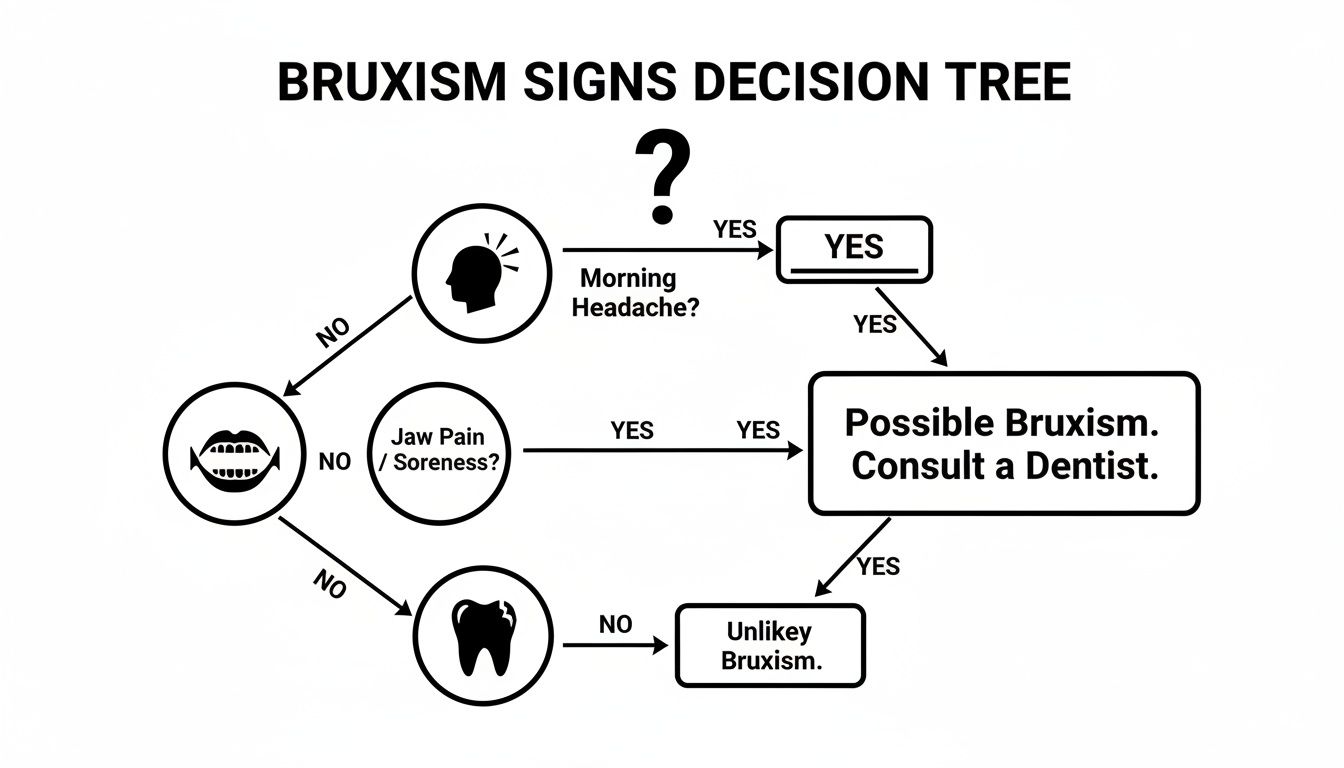
To help you connect the dots, here’s a quick-reference table of the common (and not-so-common) signs to look for.
Common and Subtle Symptoms of Night-Time Teeth Grinding
| Symptom | What It Feels or Looks Like |
|---|---|
| Morning Headaches | A dull, constant ache, often centred around your temples. |
| Jaw Soreness or Stiffness | Difficulty opening your mouth wide, or facial muscles that feel tired and overworked. |
| Tooth Sensitivity | Sudden twinges of pain with hot, cold, or sweet foods and drinks. |
| Flattened or Worn Teeth | The biting surfaces of your teeth, especially the molars, look flat and lose their natural contours. |
| Chipped or Cracked Teeth | Small, unexplained chips on the edges of your front teeth or even more serious fractures. |
| Ache Near the Ears | A persistent, dull ache that feels like an earache but isn't related to an infection. |
| Scalloped Tongue | Visible indentations along the sides of your tongue from pressing against your teeth. |
These symptoms are your body's early warning system. By recognising them, you can take action before minor issues turn into bigger problems.
Beyond the Obvious Aches and Pains
While a sore jaw and headaches are the classic indicators, your body often sends more subtle signals. Paying attention to these is the first real step towards getting the help you need. Many people dismiss them as unrelated, but they can be your body's way of telling you that your jaw is under immense strain overnight.
Watch for these less-obvious clues:
- Unexplained Tooth Sensitivity: Do you wince when you drink something hot or cold? Grinding wears down your enamel, exposing the sensitive layer of dentine underneath.
- Tiny Chips or Flattened Teeth: Take a really close look at the biting edges of your front teeth in the mirror. You might spot tiny, new chips or notice they seem shorter and flatter than they used to.
- A Dull Ache Around Your Ears: The temporomandibular joint (TMJ), your jaw joint, sits right in front of your ears. Constant clenching puts pressure on this joint, creating a persistent ache that's easily mistaken for an earache.
- Scalloped Tongue: Look for indentations along the sides of your tongue. These are formed when your tongue presses against your teeth as you clench your jaw at night.
Think of these physical clues as your body's alert system. If you ignore them, you risk more serious damage down the line, such as cracked teeth, gum recession, and chronic facial pain. Learning to listen to these signals is how you shift from simply wondering what’s wrong to taking proactive steps.
Why You Shouldn't Just Self-Diagnose
Becoming aware of your symptoms is a fantastic first step, but it’s not a substitute for a professional diagnosis. As dentists, we can confirm bruxism by examining your teeth for specific wear patterns that are impossible to spot on your own.
We can also rule out other potential causes for your pain, ensuring you get the right treatment from the get-go. This professional confirmation is the key to creating an effective plan to protect your smile and, finally, get a truly restful night's sleep.
Getting to the Root of Why You Grind Your Teeth
To really get a handle on night-time teeth grinding, you have to do a bit of detective work. It’s not enough to just stop the damage; you need to figure out why it’s happening. Pinpointing the triggers behind your jaw clenching is the first, and most important, step toward finding a solution that actually lasts.
For a lot of Kiwis, especially those of us juggling busy lives in places like Wellington, the main culprit is stress and anxiety. When you’re under the pump at work, worried about finances, or dealing with personal stuff, your body often parks that tension right in your jaw muscles. This leads to that unconscious clenching and grinding while you sleep. You’ve probably felt it yourself – a tight, achy jaw after a particularly stressful week.
But stress isn’t the whole story. A whole range of factors can kick off a grinding habit, and for most people, it’s a combination of a few different things.
How Your Daily Habits Affect Your Jaw
What you do during the day, and especially in the hours before you hit the sack, can have a massive impact on what your jaw does at night. Certain things are notorious for revving up muscle activity and messing with your sleep, creating the perfect storm for a night of teeth grinding.
Think about whether any of these sound familiar:
- Caffeine: That late-afternoon flat white might feel essential, but caffeine is a stimulant that hangs around in your system for hours. It can easily lead to more muscle tension and prevent you from getting that deep, restorative sleep you need.
- Alcohol: A glass of wine or a few beers can feel relaxing, but alcohol actually fragments your sleep. It keeps you in the lighter stages of sleep, which is prime time for bruxism to occur.
- Smoking and Vaping: Nicotine is another powerful stimulant. It can seriously ramp up subconscious muscle activity, and that includes the powerful muscles in your jaw.
It helps to think of it this way: your jaw muscles are running a marathon every single night. The key is to figure out what's fuelling that marathon—be it stress, your evening habits, or something else—so you can finally give your jaw a rest.
Physical and Medical Triggers to Consider
Sometimes, the cause of grinding isn't just about lifestyle. There are physical and medical reasons that can either cause it or make it much worse. These often fly under the radar until a dentist or doctor connects the dots. If you truly want to stop grinding your teeth, it’s worth exploring a comprehensive guide on how to stop teeth grinding at night by addressing its root causes.
An Uneven Bite (Malocclusion):
When your teeth don't meet up quite right, your jaw can spend the night shifting around, trying to find a comfortable spot. This constant movement and searching can easily turn into grinding as your teeth knock against each other in ways they shouldn't. This can be down to anything from crooked teeth to a missing tooth.
Sleep Apnoea:
This is a serious condition where your breathing actually stops and starts while you sleep. For some people, grinding is the body's unconscious reflex to tighten the jaw and thrust it forward to keep the airway open. The link is surprisingly strong – studies show that up to 1 in 4 people with obstructive sleep apnoea are also chronic teeth grinders.
Certain Medications:
A few prescription medications, especially a type of antidepressant called SSRIs, are known to have bruxism as a potential side effect. If your grinding started not long after you began a new medication, that’s definitely something to chat about with your GP.
By taking a good, honest look at your daily routines, stress levels, and your general health, you can start putting the puzzle pieces together. This self-awareness is the best tool you have on the journey to a quieter, pain-free night's sleep.
Practical At-Home Strategies to Ease Jaw Tension
Figuring out what triggers your teeth grinding is a huge step forward, but the next question is always, “So what can I do about it tonight?” The good news is you can start getting that jaw tension under control right away with a few simple, practical changes to your evening routine.
These at-home strategies are all about calming your mind and relaxing your jaw muscles before you even get into bed. This isn't about a complete lifestyle overhaul. It's about making small, sustainable swaps that encourage your jaw to relax. You’d be surprised what a big impact these consistent little adjustments can have on how you feel each morning.
Wind Down Your Mind and Your Muscles
One of the biggest culprits behind night-time grinding is a mind still buzzing from the day's stresses. If you can create a deliberate "wind-down" period an hour or so before sleep, you send a powerful signal to your body that it's time to let go of all that tension. This is your chance to actively switch off.
This could be as simple as swapping your phone for a good book. The blue light from our screens is notorious for messing with sleep cycles, whereas reading helps the mind settle. Simple breathing exercises are also incredibly effective. Even a straightforward technique like the "4-7-8" method—inhaling for four seconds, holding for seven, and exhaling for eight—can really lower your heart rate and calm your nervous system.
If you prefer a bit of guidance, many Kiwis find apps like Calm or Headspace useful. They offer short, guided meditations designed specifically for sleep, helping you untangle from the day's worries and set the stage for a restful, grind-free night.
A calm mind leads to a relaxed jaw. The hour before bed is your most powerful tool for influencing how your body behaves overnight. Treat it as an essential part of your plan to stop grinding your teeth at night.
Gentle Jaw Exercises and Self-Massage
Your jaw muscles, or the masseter muscles, are some of the strongest in your body. When they’re tight from clenching all day, a bit of gentle stretching and massage can provide immediate relief. Think of it as physiotherapy for your face.
Here are a few easy exercises you can try tonight:
- The Goldfish Exercise: Place one finger on your chin and another on your jaw joint (just in front of your ear). Gently drop your lower jaw halfway and then close it. For a bit of resistance, press lightly on your chin as you do it. Repeat this 6-10 times to gently stretch the joint.
- The Resisted Opening: Pop your thumb under your chin and slowly open your mouth while applying gentle upward pressure. Hold for 3-5 seconds, then slowly close your mouth. This is great for building awareness and control.
- Masseter Muscle Massage: Find that bulky muscle on the side of your face that pops out when you bite down. Using your fingertips, apply firm, circular pressure to this area for 30-60 seconds on each side. It’s a fantastic way to release knots and deep-seated tension.
Doing these for just a few minutes before bed can make a world of difference. To find more ways to ease facial discomfort, check out our other posts on jaw pain relief.
Optimise Your Sleep Environment
The final piece of the at-home puzzle is your bedroom. Creating an environment that promotes deep, uninterrupted sleep is key. Your body is far less likely to fall into habits like teeth grinding when it’s truly relaxed and in a restorative state.
Consider these simple but effective adjustments:
- Keep it Dark and Cool: Use blackout curtains to block out streetlights and aim for a cool room temperature. A cooler environment is proven to promote better quality sleep.
- Avoid Evening Stimulants: This is a big one. Try to avoid caffeine and alcohol for at least three to four hours before you plan to sleep. A calming herbal tea, like chamomile, is a much better choice for your jaw.
- Positive Jaw Positioning: If you can, try sleeping on your back. This allows your jaw to rest in a more natural, relaxed position. Sleeping on your side can sometimes put uneven pressure on the jaw joint.
By focusing on these practical strategies, you’re actively taking back control. You aren't just crossing your fingers and hoping the grinding stops; you are creating the perfect conditions for your mind and body to relax, paving the way for a much quieter and more comfortable night's sleep.
Protecting Your Smile with Professional Dental Solutions
While at-home strategies are a great start for managing jaw tension and symptoms, they often don't stop the physical act of grinding itself. To truly protect your smile from long-term damage, professional dental solutions are the next logical step. Think of your dentist as your most important ally—not just for treating the effects of bruxism, but for preventing irreversible harm to your teeth and gums.
You can think of it this way: at-home care is your daily defence, but professional solutions are your heavy-duty armour. As you work on managing stress and improving your sleep, a custom-fitted device can shield your teeth from the immense forces they endure overnight. This two-pronged approach gives you the best chance of finding lasting relief and preserving your oral health for years.
For most of my patients, the most critical professional intervention is a custom-fitted mouth guard for teeth grinding. This isn't the bulky, boil-and-bite guard you might find at the chemist; it’s a precisely engineered piece of equipment, made just for you.
To complement professional treatment, incorporating simple jaw relief exercises into your daily routine can make a huge difference.

This simple process of relaxing the mind, stretching the jaw, and massaging key muscles can significantly reduce the tension that builds up during the day.
The Superiority of Custom-Fitted Night Guards
When it comes to protecting your teeth, not all night guards are created equal. Those over-the-counter guards can seem like a convenient, cheap fix, but they rarely offer the protection or comfort needed for long-term use. Their generic shape often leads to a poor fit, making them feel bulky and sometimes even worsening jaw pain.
A custom-fitted night guard, on the other hand, is crafted from a precise digital scan of your mouth. The difference is night and day.
- Perfect Fit and Comfort: Because it’s made for your unique bite, it snaps into place securely. Most patients tell me they barely notice they’re wearing it, which is the key to using it consistently.
- Durable Materials: We use high-quality, durable materials designed to withstand heavy grinding forces, unlike the softer plastics of store-bought guards that wear out quickly.
- Optimal Protection: The precise fit ensures pressure is distributed evenly across your jaw. This protects not just your tooth enamel but also your temporomandibular joint (TMJ) from excess strain.
A custom night guard does more than just put a barrier between your teeth. It’s a therapeutic device that helps your jaw muscles relax into a more peaceful position, which can dial down the destructive force of your grinding.
Unchecked bruxism is about more than just tooth wear. Persistent grinding can inflame the gums and make conditions like gingivitis worse. This is a real concern when you consider that around 70% of New Zealanders face gingivitis. When clenching intensifies this inflammation, it’s a key reason why 15% of adults end up with moderate to severe gum disease.
The Process at Newtown Dental
Getting a custom night guard at our Wellington clinic is a straightforward and comfortable process. We’ve done away with the old, goopy impression trays.
First, we take a quick digital scan of your teeth using our intraoral scanner. It's fast and mess-free. This precise 3D model is then sent to our dental lab, where your custom guard is expertly crafted from high-quality, durable materials.
Once your guard is ready, you’ll pop in for a brief fitting. We'll make sure it fits perfectly and make any tiny adjustments needed for maximum comfort and effectiveness.
To learn more about how these devices work and the different types available, take a look at our detailed guide on bite guards for teeth grinding.
When More Than a Night Guard Is Needed
Sometimes, a night guard is just one part of the solution. If your grinding is being caused or made worse by an underlying issue with how your teeth meet, we might need to address that root cause.
An uneven bite, or malocclusion, can force your jaw into an awkward position. At night, your muscles work overtime trying to find a stable resting spot, which leads to clenching. If we spot this, we might discuss solutions like bite adjustments—a simple procedure involving minor reshaping of tooth surfaces to help them meet more evenly.
For more significant alignment problems, orthodontic treatment like SureSmile clear aligners can be a game-changer. By straightening your teeth and correcting your bite, we can often reduce or even eliminate the primary trigger for your grinding. This offers a more permanent solution, rather than just managing the symptoms year after year.
When Should You Talk to a Dentist About Grinding?
It can be tough to know when that occasional clenching has crossed the line into a chronic problem that needs a professional eye. While at-home strategies are a great start, there are some definite signs that it’s time to move beyond self-management and get some expert advice.
Ignoring these red flags can, unfortunately, lead to permanent tooth damage and other complex issues down the track. Knowing when to book an appointment is the first step toward getting real, lasting relief.

Clear Signs It's Time for a Check-Up
If any of the following sound familiar, it’s a strong signal that you need professional support. These aren't things to just put up with—they often point to a level of bruxism that needs intervention to prevent further harm.
- Visible Wear on Your Teeth: Take a close look in the mirror. If you notice your teeth look shorter, flatter, or have tiny chips and fractures along the biting edges, that's physical evidence of damage.
- Persistent Jaw Pain: Waking up with a stiff, sore jaw is one thing. But if that pain lingers, making it hard to chew or open your mouth wide during the day, your jaw muscles are definitely overworked.
- Chronic Morning Headaches: Consistently waking up with a dull headache centred around your temples? That’s often linked directly to intense jaw clenching overnight.
- Your Partner Hears It: One of the most reliable clues is when your partner or a family member comments on the loud grinding or clicking sounds they hear while you’re asleep.
These symptoms are more than just minor annoyances. They are clear indicators that the grinding is forceful enough to cause structural damage and significant discomfort. Seeking a professional opinion at this stage is crucial.
Overcoming the Hurdle of Dental Anxiety
We get it. For many Kiwis, the very thought of visiting the dentist can be a major source of stress. This dental anxiety is a huge barrier that often leads people to delay necessary care, allowing problems like teeth grinding to get much worse.
In fact, it’s so common that it affects over one in eight New Zealand adults, fuelling a cycle of avoidance that can lead to severe tooth wear and TMJ pain. To learn more about the local impact of dental anxiety and bruxism, check out these findings.
At Newtown Dental, we prioritise creating a relaxed, judgement-free space where you feel heard and comfortable. We understand your concerns and are here to help you, not lecture you. Our gentle approach and welcoming atmosphere are designed to put even the most anxious patients at ease from the moment they walk through the door.
For those who need a bit of extra support, we also offer IV sedation to ensure your experience is as calm and stress-free as possible. Don't let fear prevent you from getting the help you need.
Making It Easy to Get Help in Wellington
We believe getting top-quality dental care should be straightforward. To make it as easy as possible for Wellington locals to take that first step, we’ve removed many of the common hassles that come with visiting the dentist.
We offer:
- Convenient Hours: We are open seven days a week, including evenings, so you can find an appointment that fits your schedule without taking time off work.
- Free On-Site Parking: No need to stress about finding (and paying for) a park in Newtown. We have free parking right at the clinic.
- A Welcoming Start: Our $100 comprehensive new patient check-up includes a full examination, X-rays, and a polish. This gives us a clear picture of your oral health so we can create the right plan just for you.
Putting off a visit only allows the problem to continue. To really understand why this matters, you might be interested in our guide on the importance of regular dental check-ups for a healthy smile. Booking an appointment is a proactive step towards protecting your teeth and finally getting a good night’s sleep.
Common Questions About Teeth Grinding
We've walked through the signs, causes, and various ways to tackle night-time teeth grinding. To round things out, let's go over some of the most common questions we hear from our patients here in Wellington.
Can Teeth Grinding Go Away on Its Own?
Sometimes, but it’s really not something you should bet on. In children, for instance, grinding is often just a phase they grow out of as their jaws and bite develop. For adults, though, the story is usually different. Bruxism is often linked to ongoing triggers like chronic stress, anxiety, or a bite that doesn't line up quite right.
If your grinding is a direct result of a stressful month at work, you might find it eases up once things calm down. But if it’s become a regular, nightly habit, it’s highly unlikely to just disappear without you taking action. The risk of ignoring it is that the damage just keeps adding up over time, leading to things like worn-down enamel and cracked teeth.
Simply waiting for bruxism to go away is a gamble with your dental health. Being proactive and getting a proper dental assessment is always the smartest move.
How Much Does a Custom Night Guard Cost in NZ?
The price for a professionally-made, custom-fitted night guard in New Zealand does vary between clinics and depends on the materials used. As a ballpark figure, you can expect the cost to be anywhere from $400 to over $800.
I know that can sound like a lot, especially when you see cheap guards at the chemist. But it’s crucial to think about it as an investment in your long-term health. A custom guard is built to last for years, fits perfectly, and offers real protection that can save you from far more expensive dental work down the track.
To put it in perspective, fixing just one cracked tooth with a crown can easily cost over $1,500. When you look at it that way, a high-quality night guard starts to look like a very sensible financial decision.
Is My Child's Teeth Grinding a Problem?
This is a frequent concern for parents, but in most cases, it's nothing to worry about. Teeth grinding is incredibly common in children and is often tied to their development.
A few reasons why kids grind:
- A Changing Mouth: As baby teeth make way for adult teeth, their bite is in constant flux, which can trigger grinding.
- Response to Discomfort: Sometimes it's a reaction to minor pain, like an earache or teething.
- Releasing Energy: For some kids, it's just a habit, similar to thumb-sucking, that helps them release pent-up energy.
The good news is that most children simply outgrow the habit without any intervention or damage to their permanent teeth. However, if the grinding sounds particularly aggressive, your child complains of headaches or a sore jaw, or you can see obvious wear on their teeth, it's definitely worth mentioning at their next check-up.
Does a Night Guard Stop Grinding or Just Protect Teeth?
That's a great question, and it gets to the heart of what these devices do. A night guard's primary job is protection. It’s a custom-fit barrier that sits between your top and bottom teeth, absorbing the incredible forces of grinding and preventing your precious enamel from being worn down. It’s your smile’s personal bodyguard.
That said, a well-made guard can also help reduce the intensity of the grinding. By providing a stable, comfortable position for your jaw, it encourages the muscles to relax. Many of our patients report that while they might still clench a bit, the destructive side-to-side grinding movement is much, much less. So, while it may not completely "cure" the habit, it does an excellent job of protecting your teeth and helping to calm those overactive jaw muscles.
If you're fed up with waking up with a sore jaw and want to protect your smile for the long haul, our team at Newtown Dental is ready to help. Book your comprehensive new patient check-up today, and we'll work with you on a plan to stop grinding from causing any more damage.
You can get started by visiting us at https://newtowndental.co.nz.