A bite guard for teeth grinding, often called a night guard, is a custom-made dental device you wear over your teeth. Think of it as a protective shield that stops your top and bottom teeth from grinding against each other while you sleep. This unconscious clenching and grinding is a condition known as bruxism, and a well-fitted guard absorbs the huge forces involved, protecting your precious enamel from being worn away.
Understanding the Hidden Dangers of Teeth Grinding
Picture your jaw muscles going through a non-stop, high-intensity workout all night long, without your permission. That's a good way to understand bruxism. It’s a surprisingly common condition where you unconsciously grind, gnash, or clench your teeth. While many people link it to stress, the triggers can be much broader, including everything from sleep disorders and lifestyle choices to a misaligned bite.
Because it mostly happens while we're asleep, many Kiwis have no idea they’re doing it until noticeable symptoms appear. You might wake up with a dull, persistent headache, a sore jaw, or unusually sensitive teeth and not put two and two together. This is where the real danger lies—the damage is gradual and silent, but the long-term effects can be serious.
The Real Impact of Untreated Bruxism
If left unchecked, the constant pressure from bruxism can lead to some significant and often costly dental problems. The force your jaw can exert is powerful enough to cause lasting damage that affects not just your teeth, but your overall comfort and wellbeing. Over time, you could be looking at:
- Tooth Damage: The constant friction wears away tooth enamel, which leads to heightened sensitivity. It can also cause teeth to chip, develop cracks, or even fracture completely.
- Jaw and Muscle Pain: Continuous clenching puts enormous strain on your jaw muscles and the temporomandibular joint (TMJ). This can lead to chronic facial pain, discomfort that feels like an earache, and even difficulty chewing.
- Headaches: Waking up with tension headaches is a very common side effect, caused by the relentless muscle work in your jaw and temples overnight.
Why a Proactive Approach Is Crucial
This isn't a rare problem. In fact, it's incredibly widespread here in New Zealand. Research from the Dunedin Multidisciplinary Health and Development Study revealed that among 38-year-old adults, 31.6% reported grinding their teeth at night. Even more surprising, a staggering 48.3% experienced clenching or grinding during the day. You can learn more about these local insights into dental health and parafunction.
A custom-fitted bite guard isn't just a piece of plastic; it's a preventative shield. By creating a protective cushion, it absorbs the grinding forces that would otherwise damage your teeth, relaxes your jaw muscles, and helps break the cycle of pain and discomfort.
Recognising the signs and taking action early is the best thing you can do to protect your smile. Treating bruxism with a high-quality, properly fitted bite guard is a smart investment in your long-term oral health, helping you avoid more complex and expensive restorative treatments down the track.
Recognising the Telltale Signs of Bruxism
Because teeth grinding often happens while we sleep, many people have no idea they’re even doing it. It’s a bit like a silent alarm going off in your mouth every night. You don't hear it, but you'll definitely start to feel the effects when you wake up, even if you can't put your finger on the exact cause.
The first clues are often subtle and easy to brush off. You might wake up with a dull, persistent headache or notice your jaw feels tight and tired, almost like you’ve been chewing on steak all night long. These morning symptoms are your body's way of signalling that your jaw muscles have been working overtime.
Beyond a Sore Jaw
While jaw pain and morning headaches are the classic red flags, the signs of bruxism can show up in some surprising ways. The intense pressure from clenching and grinding doesn't just stay in your jaw; it radiates outwards, creating a ripple effect of symptoms that can easily be mistaken for other health issues.
You might be grinding your teeth if you regularly experience:
- Persistent Headaches or Migraines: Waking up with tension headaches that seem to centre around your temples is a very common sign.
- Earache-Like Pain: The jaw joint is located right next to your ear canal, so inflammation and muscle tension in the area can feel a lot like an ear infection.
- Facial Pain and Muscle Fatigue: Your face might feel sore, tired, or even tender to the touch, especially first thing in the morning.
- Stiff Neck and Shoulders: It’s all connected. The tension from your jaw can travel down, leading to stubborn stiffness and pain in your neck and upper back.
These symptoms can be incredibly frustrating, particularly when they seem to have no obvious cause. Realising that they could all be linked back to teeth grinding is the first crucial step toward finding relief.
The Direct Damage to Your Smile
Over time, the signs of bruxism become much more visible, leaving a direct impact on your oral health. Your dentist is often the first person to spot the evidence during a routine check-up, as the physical toll it takes on your teeth is hard to miss.
The constant friction and pressure can lead to serious, and often permanent, damage. Think of it like taking sandpaper to a piece of wood every single night—eventually, the surface is going to wear away. The same thing happens to your tooth enamel.
This nightly habit exerts incredible force, causing flattened, worn-down teeth, increased tooth sensitivity to hot and cold, and even chipped or fractured teeth. In severe cases, it can also damage existing dental work like fillings or crowns.
This physical damage is also directly linked to a more complex issue known as temporomandibular joint (TMJ) disorder. The immense strain on your jaw joint can lead to painful clicking or popping sounds when you open your mouth, difficulty chewing, and even episodes where your jaw locks up.
Here in New Zealand, the link between grinding and TMJ symptoms is well-documented. Research from the University of Otago's renowned Dunedin Study found that among 38-year-olds, 31.6% experience nocturnal teeth grinding. This is a significant contributor to TMJ-related problems, with 29.4% reporting jaw pain and 34.8% experiencing jaw clicking. If you're interested, you can learn more about the findings on bruxism and its effects in New Zealand.
If any of these symptoms sound familiar, it’s really important to get a professional diagnosis. A dentist can confirm if bruxism is the root cause of your discomfort, rule out any other potential problems, and help you protect your teeth from further harm. This is a key part of our approach to comprehensive general dentistry.
A Practical Comparison of Your Bite Guard Options
When you start looking into bite guards for teeth grinding, you’ll quickly see there are a few different paths you can take. I often tell my patients it’s a bit like buying shoes: you could grab a cheap pair of jandals from the dairy, find some adjustable sandals, or invest in a pair of shoes professionally fitted for perfect support. Each one has its place, but the comfort, durability, and protection they offer are worlds apart.
Bite guards are much the same. They generally fall into three camps: the generic over-the-counter guards, the slightly more adaptable boil-and-bite models, and the professionally made custom-fitted guards you get from a dental clinic like ours. While the upfront cost often steers people's decisions, it’s vital to understand the huge differences in fit, effectiveness, and long-term value to make the right choice for your oral health.
Over-the-Counter Stock Guards
The most basic and cheapest option is the pre-formed, one-size-fits-all stock guard you can pick up at most pharmacies. Their main selling point is convenience—they’re ready to use straight out of the packet.
But that’s where the benefits end. Because they aren't designed for anyone's mouth in particular, they are almost always bulky, uncomfortable, and fit poorly. This loose fit can feel awkward to wear all night and might even get in the way of your breathing. While they do put a barrier between your teeth, their flimsy nature means they offer very little real protection against the immense forces of bruxism.
This chart can help you spot if what you're experiencing lines up with the common signs of bruxism that really call for a proper guard.
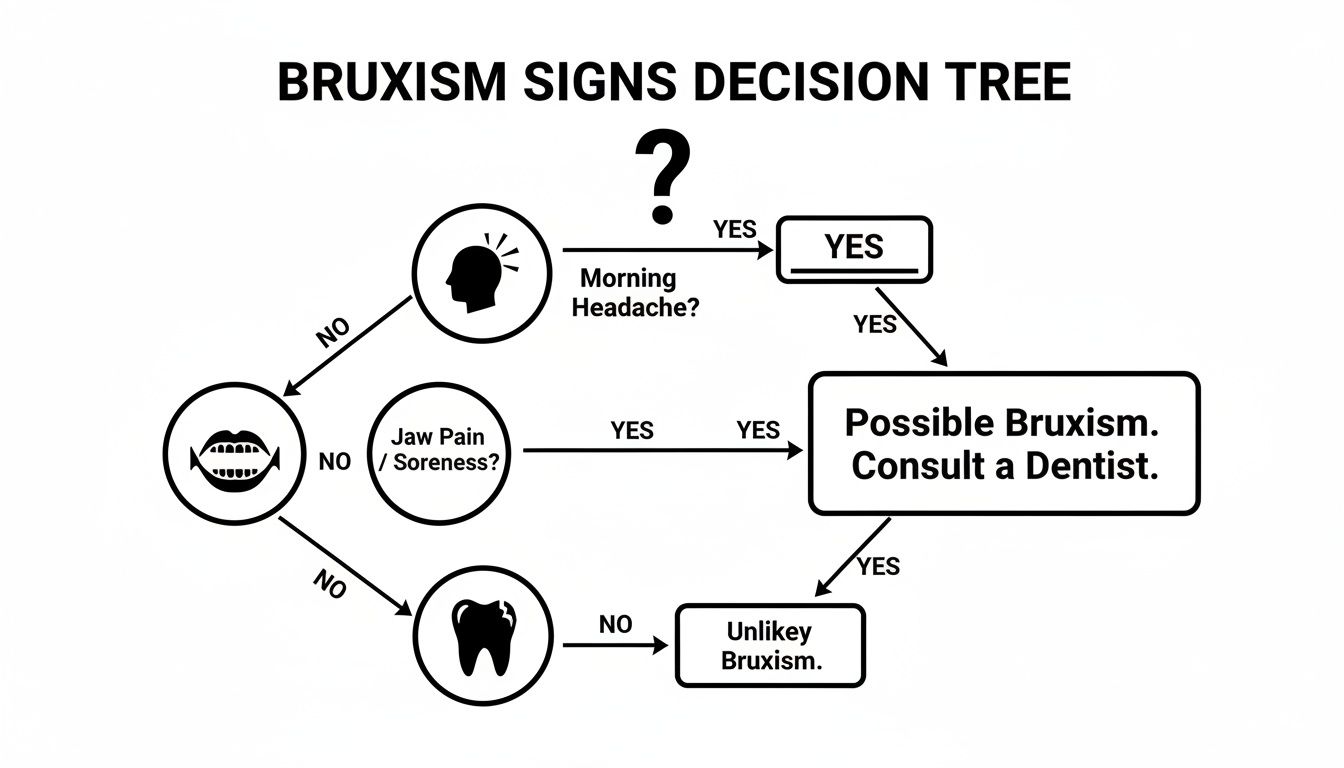
As you can see, things like morning headaches, a sore jaw, and visibly worn-down teeth are tell-tale indicators that you might be grinding.
Boil-and-Bite Guards
Taking a small step up, boil-and-bite guards offer a bit of personalisation. These are made from a thermoplastic material that you soften in hot water before biting into it, moulding the guard to your teeth as it cools.
While this process gives you a better fit than a stock guard, it’s still far from ideal. The material is often quite thick, and it’s incredibly difficult to get an even, accurate impression at home. This can easily lead to an unbalanced guard that puts uneven pressure on your teeth and jaw, sometimes making TMJ problems worse instead of better.
An ill-fitting guard, whether it’s a stock model or a poorly moulded one, does more than just feel uncomfortable. It can actually shift your bite or create new pressure points, leading to even more jaw strain and pain.
Custom-Fitted Dental Guards
Without a doubt, the gold standard for protecting your teeth is a custom-fitted bite guard from your dentist. For this, we take a precise digital scan or physical impression of your teeth right here in the clinic. This detailed mould is then sent to a specialised dental laboratory, where technicians craft a guard from high-quality, durable materials specifically for you.
The result is a slim, comfortable device that fits over your teeth perfectly—like a glove. Because it’s made just for you, it stays securely in place all night without feeling bulky, allowing for natural breathing and a much more restful sleep.
This perfect fit is what really matters; it ensures the grinding forces are distributed evenly across your jaw. This not only protects your precious tooth enamel but also helps your overworked jaw muscles finally relax.
Bite Guard Options At A Glance
To help you weigh up the pros and cons, here’s a straightforward comparison of the three main types of bite guards.
| Feature | Over-the-Counter Guard | Boil-and-Bite Guard | Custom-Fitted Dental Guard |
|---|---|---|---|
| Fit & Comfort | Poor fit; often bulky and uncomfortable. | Semi-customisable but can be uneven and thick. | Perfect, snug fit; slim and comfortable. |
| Protection Level | Minimal; offers a basic barrier only. | Moderate; better than stock but can be inconsistent. | Excellent; evenly distributes force, protects enamel. |
| Durability | Low; wears out quickly. | Low to moderate; material degrades over time. | High; made from strong, long-lasting materials. |
| Effect on Jaw | Can worsen jaw strain due to poor fit. | May cause uneven pressure and TMJ issues. | Helps relax jaw muscles and alleviate pain. |
| Cost | $20 – $50 (lowest initial cost). | $40 – $80. | $400 – $800+ (higher initial investment). |
| Best For | Very temporary, emergency use. | Short-term use while considering a custom guard. | Long-term prevention of tooth damage and pain. |
While a custom guard has a higher initial cost, its superior comfort, protection, and durability make it a far more effective and economical solution in the long run. A well-cared-for custom guard can last for years, saving you from replacing cheaper guards over and over—and more importantly, preventing the need for expensive restorative dental work down the line.
Getting a Custom-Fitted Bite Guard: What to Expect
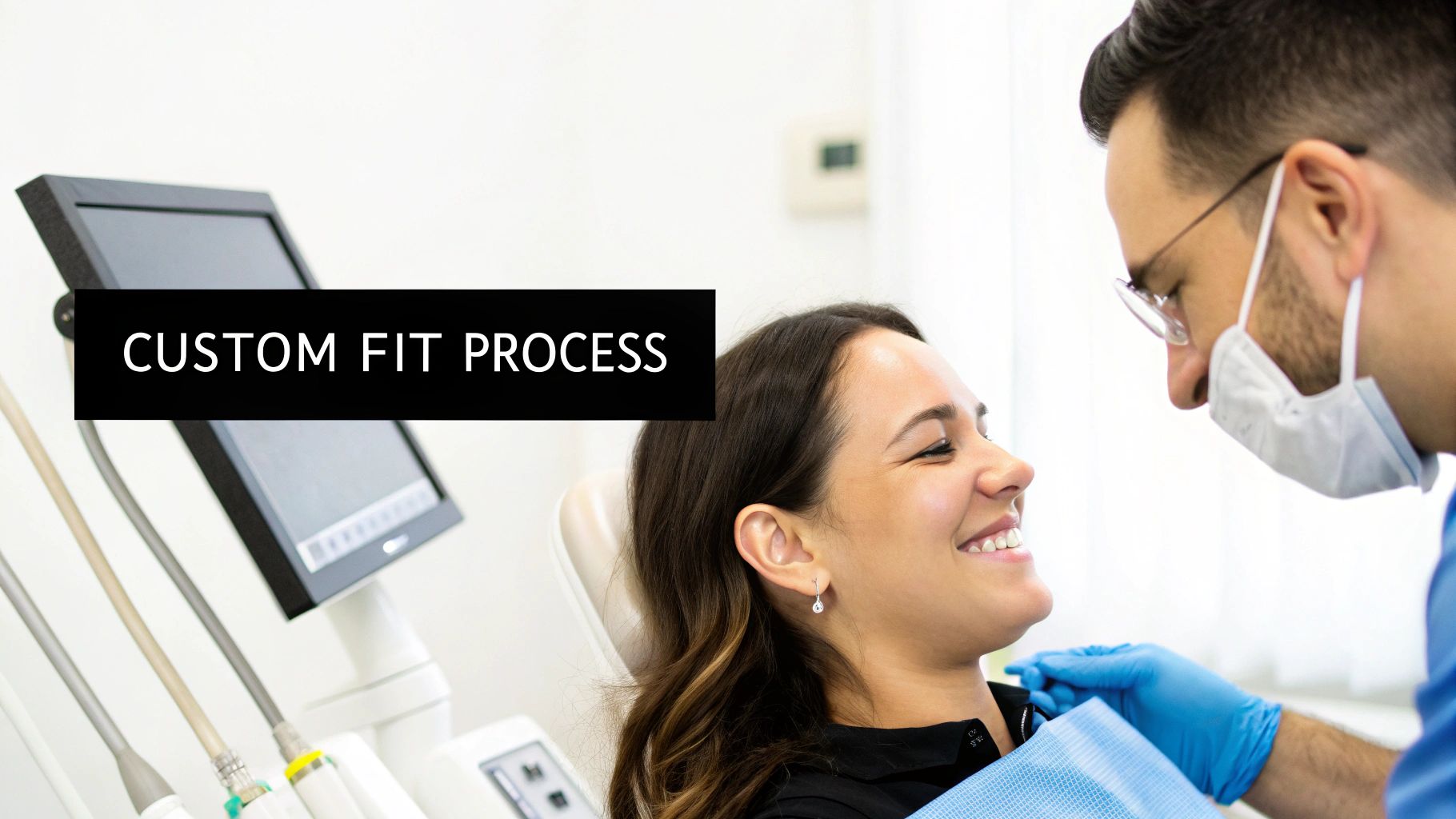
If you've decided a custom bite guard is the right move to protect your smile, you'll be glad to know the process is simple and focused entirely on your comfort. At Newtown Dental, we've fine-tuned our approach to be as straightforward as possible. It's all about getting you a durable, effective solution that provides real relief, without any fuss.
It all starts with a simple chat. We need to hear what you're going through—whether it’s waking up with headaches, a sore jaw, or noticing your teeth feel more sensitive. This first conversation helps us confirm that bruxism is the culprit and a custom guard is the best way forward.
Your First Visit: Consultation and Diagnosis
During your first appointment, one of our dentists will have a good look at your teeth, jaw, and the surrounding muscles. We're searching for the classic signs of grinding, like worn-down enamel, tiny cracks in your teeth, or tenderness around your jaw joint (TMJ). This check-up is key to figuring out how severe the grinding is.
This is also your chance to ask us anything. We'll walk you through how a custom guard actually works—how it cushions your teeth, stops further damage, and encourages your jaw muscles to relax. The more we understand your specific symptoms, the better we can ensure the final guard is a perfect match for you.
It's a really common issue here in New Zealand. In fact, the University of Otago's Dunedin Study found a surprising difference between genders: 54.2% of women at age 38 reported clenching or grinding during the day, compared to just 42.5% of men. You can read more about these NZ bruxism findings to see just how prevalent it is.
Taking a Perfect Impression of Your Teeth
Once we've diagnosed bruxism, the next step is making an exact model of your teeth. This is where the magic of a "custom" bite guard for teeth grinding happens. Don't worry, the days of uncomfortable, goopy trays are long gone. We use modern, gentle techniques to get a precise impression.
We'll take a mould of either your upper or lower teeth, depending on what will work best for you. We typically do this in one of two ways:
- Digital Scanning: We use a small, wand-like intraoral scanner to capture a super-detailed 3D picture of your teeth. It’s quick, comfortable, and gives us an incredibly accurate digital blueprint for your guard.
- Physical Moulds: Sometimes, a traditional impression using a soft putty is still the best option. We make sure this is done quickly and gently, capturing every little detail of your smile.
This perfect replica of your teeth is then sent off to a specialised dental lab right here in New Zealand.
This meticulous impression process is what truly separates a professional guard from anything you can buy at the chemist. The incredible precision ensures your bite guard fits like a glove—snug, secure, and able to distribute pressure evenly for maximum protection and comfort.
The Final Fitting: Nailing the Comfort
When your custom-made bite guard arrives from the lab, crafted from high-quality, durable materials, you'll pop back in for a final fitting. This is a quick but crucial visit to make sure everything is just right.
We'll place the guard in your mouth to check that it feels secure without being too tight or bulky. We'll also ask you to bite down to ensure it doesn't throw your natural jaw alignment out of whack. If any tiny adjustments are needed for that perfect feel, we can do them right then and there.
Our goal is simple: for you to walk out feeling confident and comfortable, ready for a peaceful—and protected—night's sleep. To get a better idea of what to expect during your visits, feel free to check out our other resources on dental appointments.
Caring For Your Bite Guard to Ensure Its Longevity
Your custom-fitted bite guard is a serious investment in your dental health, and looking after it properly means it will protect your smile for years to come. Just like any important piece of equipment, a little bit of regular maintenance goes a long way. A simple daily routine is all it takes to prevent bacteria from building up, keep the material in great shape, and ensure your guard stays comfortable and effective.
The most important thing you can do is clean your guard every single morning, right after you take it out. This stops saliva and plaque from drying on the surface, which is what leads to bad smells and staining. A quick rinse under the tap is a good start, but it needs a more thorough clean to stay truly hygienic.
Creating a Simple Cleaning Routine
You don't need fancy products to clean your bite guard properly. A soft-bristled toothbrush (keep one just for your guard) and a gentle, non-abrasive cleaner are all you need. The key thing to remember is to avoid using regular toothpaste. Most toothpastes are slightly abrasive and can create microscopic scratches on the guard’s surface—perfect little hiding spots for bacteria.
Instead, just follow these easy steps every day:
- Rinse Immediately: As soon as you take it out, rinse your guard under cool, clean water. Never use hot water, as it can easily warp the specialised plastic and ruin that perfect custom fit.
- Gentle Brushing: Use your dedicated soft toothbrush and a mild, unscented soap (or a special denture cleaner) to gently scrub all its surfaces.
- Rinse Thoroughly: After brushing, give the guard another good rinse under cool water to wash away any soap or cleaning solution.
- Dry Completely: Let your bite guard air-dry completely or pat it with a clean towel before you put it away for the day.
Storing your guard correctly is just as important as cleaning it. Always keep it in the hard, ventilated case we provide. This protects it from getting lost or damaged, keeps airborne dust off it, and allows air to circulate, preventing moisture and mould.
Knowing When It’s Time for a Replacement
Even with the best care, a bite guard won’t last forever—especially if you’re a heavy grinder. Over time, the constant force of grinding will eventually wear down the material. It's designed to take that punishment so your teeth don't have to! That’s why checking it regularly is so important.
Keep an eye out for these common signs of wear and tear:
- Visible cracks, thinning spots, or chips in the material.
- The guard starts to feel loose or doesn't fit as snugly as it used to.
- You notice a change in your bite or feel new discomfort when wearing it.
A well-made custom guard can last for several years, but the exact lifespan really depends on the person. The best way to know for sure is to bring your guard with you to your regular dental check-ups. We can give it a professional look-over to check its fit and integrity, making sure it’s still protecting you properly. This is just one small part of a complete oral health strategy, which you can learn more about in our guide to professional dental hygiene services.
Your Bite Guard Questions, Answered
If you’re thinking about a bite guard for teeth grinding, you probably have a few questions. Our Wellington patients often want to know about the practical side of things—cost, comfort, and how long their investment will actually last. Here are some straightforward answers to the questions we hear most often.
How Much Does a Custom Bite Guard Cost?
This is usually the first thing people ask, and we believe in being upfront about it. A custom-fitted bite guard from a dentist costs more initially than one from the chemist. But it’s crucial to see it as a long-term investment in your oral health, not just a purchase.
Think of it this way: a professionally made guard is a preventative tool. It’s designed to stop you from needing far more expensive and invasive dental work down the line. The cost of fixing a single cracked tooth or getting a crown to repair grinding damage can easily be several times the price of a custom guard.
We know budget is a real consideration. That’s why we provide a detailed cost breakdown and have payment options available to make sure this vital protection is accessible. The real value is in the superior materials, the perfect fit, and the peace of mind that comes from knowing your teeth are properly protected.
Will a Bite Guard Be Uncomfortable to Sleep With?
The thought of wearing something in your mouth all night can be a bit strange, and we hear this concern a lot. Many people have tried those bulky, ill-fitting guards from a shop and assume a custom one will feel the same. Thankfully, they’re worlds apart.
The difference is all in the design. Our custom-fitted bite guards for teeth grinding are crafted from smooth, high-quality, lightweight materials. Because they’re moulded from a precise scan of your teeth, they fit snugly and securely without feeling clunky.
A custom guard is designed to be unobtrusive. It shouldn’t get in the way of your breathing or feel like a foreign object. The goal is for it to become a seamless part of your nightly routine so you can get the restful sleep you need.
Most of our patients get used to their guard within just a few nights. During your fitting appointment, we’ll spend time making sure it feels just right, making any small adjustments needed to guarantee your comfort.
How Long Will My Custom Dental Guard Last?
A custom bite guard is built to last. We use professional-grade materials specifically designed to stand up to the immense force of nightly clenching and grinding. While the exact lifespan depends on how severe your bruxism is, a well-cared-for guard can last for several years.
A few things influence how long your guard will stay effective:
- Grinding Intensity: Someone with severe bruxism will naturally put more wear on their guard than someone with a milder case.
- Material Choice: We choose the best material for you—whether it’s a softer laminate or a harder acrylic—based on your specific needs.
- Proper Care: Following a simple daily cleaning and storage routine is the single best way to extend its life.
Bringing your guard to your regular dental check-ups is a great idea. It lets us inspect it, check for any signs of wear, and give you a heads-up when a replacement might be needed to ensure you always have maximum protection.
Can I Get Help For Jaw Pain Straight Away?
Absolutely. We know how debilitating severe jaw pain can be, and you shouldn’t have to wait for relief. If you’re dealing with intense pain, a clicking jaw, or headaches from grinding, you don’t need to suffer through it while a custom guard is being made.
We keep priority slots open for dental emergencies every day. You can book a same-day appointment where our main goal is to get you out of pain immediately.
During this visit, we will:
- Assess Your Condition: We'll examine your jaw and teeth to figure out the source of the pain and rule out other issues.
- Provide Immediate Relief: We'll discuss effective pain management strategies you can use at home to ease your discomfort.
- Start the Long-Term Solution: If a bite guard is the right way forward, we can take the impressions right then and there during your emergency visit to get the process started.
This approach gives you a path to both instant relief and a lasting solution, helping you feel comfortable again as quickly as possible.
Ready to protect your smile from the damaging effects of teeth grinding? At Newtown Dental, our experienced team is here to provide you with a comfortable, custom-fitted bite guard designed for lasting relief.