Tag

dental costs nz

Wisdom Tooth Removal NZ Cost: A Kiwi’s 2026 Guide

By Uncategorized

If you’re thinking about getting your wisdom teeth out, one of the first questions you’ll probably ask is, "How much is this going to cost?" It’s a fair question, and the honest answer is: it depends.

In New Zealand, you can expect a straightforward, simple extraction to start from around $450 per tooth. For a more complicated surgical removal, the price is generally $650 or more. The final cost really comes down to the specifics of your teeth.

Your Guide to Wisdom Tooth Removal Costs in New Zealand

When you’re facing a wisdom tooth extraction, wrapping your head around the potential costs is a huge part of the process. There’s no single price tag because every mouth is different.

Think of it this way: a simple job, like getting a tooth out that’s already fully grown in and easy to reach, is a bit like a quick oil change for your car. But if the tooth is stuck under the gum or tangled in the bone—what we call "impacted"—it becomes more like major engine work. It requires more time, more skill, and specialised equipment.

The complexity of your situation is the biggest driver of the final cost. Let's break down the two main types of extractions.

Simple vs. Surgical Extractions

A simple extraction is just what it sounds like. This is for a wisdom tooth that has come through the gum properly and is sitting in a normal position. Your dentist can usually remove it relatively easily without needing to make any cuts. Naturally, this is the most affordable route.

A surgical extraction is a different story. This is necessary when a tooth is impacted, meaning it's trapped beneath the gum line or blocked by bone. To get it out, your dentist or oral surgeon needs to make an incision. Sometimes, the tooth even has to be carefully broken into smaller pieces to be removed safely. Because this is a more involved procedure, it costs more.

This chart gives you a quick visual on the starting costs for each type of removal here in New Zealand.

Bar chart illustrating New Zealand wisdom tooth removal costs: $450+ for simple, $650+ for surgical.

As you can see, the starting point for a surgical extraction is quite a bit higher, which directly reflects the extra work involved.

To give you a clearer picture, here’s a quick breakdown of what you might expect to pay per tooth.

Estimated Wisdom Tooth Removal Costs in NZ (Per Tooth)

Extraction TypeTypical Cost Range (NZD)
Simple Extraction (Erupted Tooth)$450 – $650
Surgical Extraction (Impacted Tooth)$650 – $1,200
Complex Surgical (Deeply Impacted)$1,200 – $2,500+

These figures, based on data from Wellington dental practices and other local NZ dentists, show just how much the price can vary depending on complexity.

But the type of extraction isn't the only thing that determines your final bill. A few other key factors come into play.

  • Diagnostic X-Rays: We can't see what's happening under your gums without a good look. A standard panoramic X-ray (OPG) might cost around $145, but for tricky cases, we might need a 3D Cone Beam CT scan, which can be $320 or more.
  • Sedation: Local anaesthetic is included as standard, but many people prefer to be more relaxed. Opting for IV sedation (or "sleep dentistry") will make the experience much more comfortable, but it does add to the overall cost.
  • Your Location: Just like with many other services, dental fees can vary a bit from city to city across New Zealand.

Knowing about these moving parts from the get-go helps you plan properly and avoids any surprises when you get the bill. Next, we’ll dive a little deeper into each of these factors so you can feel fully prepared.

What Factors Really Shape Your Final Bill?

Doctor and smiling patient reviewing medical information on a tablet during a healthcare consultation.

Now that you've got a ballpark idea of the cost, let's get into the details of what makes up the final price. The total for wisdom tooth removal isn't just one number; it’s built from a few key components that all contribute to a safe and successful procedure.

Think of it like getting your car serviced. A basic oil change has a standard price. But if the mechanic finds the brake pads are worn or the engine needs a more complex repair, the cost naturally goes up. It all depends on what’s happening "under the bonnet."

In dentistry, the same logic applies. Let's break down the main factors that influence the final quote.

Complexity: The Biggest Driver of Cost

By far, the biggest factor that determines your bill is how difficult the extraction will be. This all comes down to the position of your wisdom tooth in your jaw.

  • Simple Extraction: This is the most straightforward and affordable scenario. The tooth has fully emerged from the gum, is sitting upright, and is easy to access. Your dentist can remove it cleanly without needing to make any cuts. It’s a quicker, less involved procedure.
  • Surgical Extraction: This is what’s needed for an impacted tooth—one that's stuck under the gum, partially covered by bone, or growing sideways into its neighbour. To get it out, your dentist or surgeon has to make a small incision in the gum. Sometimes, the tooth even needs to be cut into smaller pieces to be removed safely. This takes more time, skill, and specialised equipment, which is why it costs more.

We always use diagnostic imaging, like X-rays, to get a clear picture of what’s going on before we start. This lets us see the tooth’s exact position, plan the safest approach, and make sure there are no surprises on the day.

Sedation Options: Your Comfort Level

Your comfort during the procedure is a top priority, and the type of sedation you choose will directly impact the total cost.

Local Anaesthetic
This is the standard for all extractions and is included in the base price. We completely numb the area around the tooth, so while you’ll be awake and might feel some pressure, you won’t feel any pain. It’s a very effective and budget-friendly option.

IV Sedation (Sleep Dentistry)
For many Kiwis, especially those who are anxious or having a complex surgical removal, IV sedation is an absolute game-changer. A sedative is given through a vein in your arm, putting you into a deeply relaxed, dream-like state. While you're still conscious enough to respond if needed, you'll have little or no memory of the procedure afterwards.

This option adds to the cost because it requires:

  • A specially trained dentist or an anaesthetist to administer and monitor you.
  • Specialised monitoring gear to ensure your safety throughout.
  • Extra time for both the procedure itself and for you to recover at the clinic under our supervision.

While it's an added investment, countless patients tell us the peace of mind and stress-free experience is well worth it. You can learn more about the benefits of IV sedation for tooth extractions in our guide to see if it’s the right choice for you.

How Many Teeth Are Being Removed?

It might sound odd, but having all four wisdom teeth removed at once is often cheaper per tooth than doing them one at a time over separate appointments.

Although the total bill is higher upfront, you save money by not paying for certain things multiple times. You only have one initial consultation, one set of major X-rays, and most importantly, you only pay the anaesthetist's fee once if you opt for IV sedation. It also means you only have to go through the recovery process one time.

Public or Private Care for Wisdom Teeth? Here's the Deal.

A dentist shows dental procedure options and cost factors to a female patient on a tablet.

It’s one of the first questions we get asked: can I get my wisdom teeth out through the public health system? It’s a great question, but for most adults in New Zealand, the answer is usually no.

While our public system is a lifesaver, its role in adult dentistry is very specific and quite limited. For the vast majority of wisdom tooth extractions, you'll be looking at the private dental system. Knowing how each pathway works is the key to planning your treatment without any nasty surprises for your health or your wallet.

When Can the Public System Help?

Getting your wisdom teeth removed through the public system isn't something you can just book in for. Think of it as the emergency services of dentistry—it’s there for true medical crises, not for planned procedures.

Access is tightly controlled and usually only happens under a few specific conditions:

  • A Serious Medical Emergency: We're not just talking about a sore tooth. This means a severe, spreading infection, major facial swelling that makes it hard to breathe or swallow, or a serious injury to your jaw.
  • Referral from Your Dentist or GP: Your journey to public care almost always starts at a private clinic. If your dentist assesses the situation and sees it meets the strict criteria for a hospital-level emergency, they'll make an urgent referral.
  • Other Health Complications: Sometimes, a patient might have a pre-existing medical condition that makes a normal extraction in the dental chair too risky. In these cases, they may be referred for treatment in a hospital.

The bottom line is that the public system is a safety net for urgent, complex medical issues. It’s not set up for routine or even complicated surgical extractions that can be safely managed in a private clinic.

The Upside of Going Private

Since private care is the standard path for most Kiwis, it’s good to know what you’re getting. Yes, it’s an out-of-pocket expense, but going private puts you firmly in the driver's seat when it comes to your health, comfort, and schedule.

Here are the main advantages you can expect:

  • You Won't Be Waiting Long: This is the big one. In the private system, you can usually get a consultation booked and your procedure scheduled within days or weeks. That means getting out of pain fast and stopping a small problem from becoming a big one. Public waitlists, on the other hand, can be incredibly long for anything that isn't a life-threatening emergency.
  • You Choose Your Dentist: You get to pick a dentist or oral surgeon you trust and feel comfortable with. You can do your homework, read reviews, and find a team known for their expertise in surgical extractions, like our experienced dentists right here at Newtown Dental.
  • Comfort is a Priority: Private clinics are all about making the experience as stress-free as possible. While a local anaesthetic is always used, you have options. Many patients, especially those who are anxious or having a complex extraction, choose IV sedation for a completely relaxed, twilight-like state.
  • No Hidden Surprises: A good private clinic will walk you through everything. You'll get a full consultation, all the necessary x-rays, and a clear, itemised quote. This transparency in the wisdom tooth removal NZ cost means you can plan your finances properly. At Newtown Dental, we make sure you understand every detail of your treatment plan before we even start.

So, while the public system is there for a crisis, private care offers the timely, personalised, and comfortable treatment that most people want and need for wisdom tooth removal. It lets you take back control of your dental health and get it sorted on your terms.

Using ACC, Insurance, and WINZ to Help with Your Costs

Thinking about the cost of wisdom tooth removal can be stressful, but the good news is you might not have to cover the entire bill yourself. In New Zealand, there are a few avenues for financial help that can make the treatment much more affordable.

Let's break down how ACC, private health insurance, and Work and Income (WINZ) can chip in. Each one works differently and has its own set of rules, so figuring out which one fits your situation is the first step to lowering your out-of-pocket costs.

ACC for Accident-Related Dental Injuries

It’s a common question, but unfortunately, ACC doesn’t cover dental problems that just happen over time, like an impacted wisdom tooth. ACC (Accident Compensation Corporation) is set up purely for injuries caused by an accident or trauma.

So, if you took a tumble off your bike or a hit during a rugby game and damaged a wisdom tooth, that’s where ACC steps in. If the tooth needs to be removed as a direct result of that injury, ACC can help with the cost.

  • What It Covers: ACC contributes to the cost of the necessary treatment to fix the injury, which can include consultations, X-rays, and the extraction itself.
  • What It Doesn't Cover: It won’t pay for removing a wisdom tooth because of everyday issues like decay, infection, or crowding. Those aren't considered accidents.
  • The Process: It’s straightforward. Your dentist will assess the injury at your appointment, help you fill out an ACC claim form, and submit it for you if it meets the criteria.

The key takeaway is that ACC is injury-based. If your wisdom tooth is causing trouble simply because of how it’s growing, this won't be the right path for you. For a broader look at what's covered for different procedures, our guide on the general tooth extraction cost in Wellington is a great place to get more details.

Private Health Insurance Coverage

If you have private health insurance, it’s time to dig out your policy documents. Most basic plans won’t cover routine dental check-ups, but many offer support for surgical procedures—and wisdom tooth removal often falls squarely into that category.

The magic words you're looking for in your policy are "surgical dental" or "oral surgery." A simple, straightforward extraction might not make the cut, but a complex surgical removal for an impacted tooth usually does.

Before you go ahead, here’s a quick checklist:

  1. Review Your Policy: Dive into your plan's benefits and look for oral surgery cover. Take note of any annual limits or exclusions that might apply.
  2. Check Waiting Periods: Most insurers have a waiting period, often 12 months, before you can claim for major dental work. Make sure you've been covered long enough.
  3. Request a Pre-Approval: We can give you an itemised quote for your procedure. Sending this to your insurer for pre-approval gives you peace of mind, as you’ll know exactly what they’ll pay before you commit.

Support from Work and Income (WINZ)

For Kiwis facing financial hardship, Work and Income (WINZ) can be a lifeline for urgent dental treatment. This support is there to ensure people on lower incomes or benefits can get essential care when they can't afford it.

You may be able to get a dental grant if you meet their criteria.

How WINZ Dental Grants Work:

  • Eligibility: This is means-tested, so it depends on your income and any cash assets you have.
  • Funding Amount: WINZ can provide grants for emergency dental needs, typically up to $1,000 in a 12-month period. Because it's a grant, not a loan, you don't have to pay it back.
  • The Process: You'll need to get a quote from your dentist outlining the necessary treatment. You take this quote to WINZ with your application. The treatment must be considered urgent and essential for relieving pain or fixing an infection.

This support can make all the difference when you're hit with a painful wisdom tooth problem, helping you get the care you need right away.

How We Make Wisdom Tooth Care Clear, Affordable, and Stress-Free

A smiling customer service representative hands documents to a client at a desk, with a 'Cost Support' sign in the background.

Let's be honest—thinking about the cost and complexity of wisdom tooth removal can be a real source of anxiety. Here at Newtown Dental, we see it as our primary job to cut through that confusion. Our whole approach is built around making your experience as clear, comfortable, and predictable as it can possibly be.

We put you first, which means no financial surprises and no guesswork. It’s all about giving you the clarity and confidence you need to make the right decisions for your health.

Clear, Itemised Quotes—No Hidden Surprises

We know the biggest worry for many people is the fear of a surprise bill. That's why we’ve built our process around total transparency, starting with a detailed consultation where we take the time to really listen and understand your specific situation.

This isn't a quick glance in your mouth. We use diagnostic tools like X-rays to get a complete picture of what’s going on with your wisdom teeth. This allows us to map out a precise, fully itemised treatment plan and quote. You’ll see every single cost broken down before we even think about starting treatment.

At Newtown Dental, your quote is a promise. It will clearly list the costs for the consultation, X-rays, the extraction itself, and any sedation you choose. You’ll know exactly what to expect, allowing you to budget with complete certainty.

Of course, for us to offer this level of care, patients need to be able to find us in the first place. Understanding the world of Dental Practice SEO is what helps clinics like ours connect with people searching for straightforward advice on procedures like wisdom tooth removal. It’s a key part of ensuring you can find trustworthy information right when you need it most.

Expertise in Both Complex and Anxiety-Free Procedures

Wisdom tooth removal is far from a one-size-fits-all job. Some are simple, while others are deeply impacted and demand a high level of surgical skill. Our experienced team has seen it all and is well-equipped to handle everything from routine extractions to the most complex surgical removals.

We also know that for many people, dental anxiety is very real. We specialise in gentle care and offer IV sedation to make your experience genuinely comfortable and stress-free.

  • Complex Surgical Extractions: Our dentists have the advanced skills needed to safely and effectively manage wisdom teeth that are impacted, sideways, or awkwardly positioned.
  • Gentle IV Sedation: If you're feeling anxious or are in for a longer procedure, IV sedation can be a game-changer. It puts you in a deeply relaxed, dream-like state, and most people have little to no memory of the procedure afterwards.

This blend of surgical expertise and compassionate sedation means you can rest easy knowing you're in safe and capable hands, no matter what your situation looks like.

Making Your Visit Genuinely Convenient

We believe great dental care should fit into your life, not force you to rearrange it. Every step of your journey with us, from booking your appointment to paying for your treatment, is designed to be as easy and hassle-free as possible.

We’ve focused on the practical things that matter to busy Wellingtonians:

  • Open 7 Days: We have appointments available every day of the week, with extended evening hours, so you don’t have to sacrifice your work or personal time for your dental health.
  • Free Onsite Parking: Forget the headache of finding a park in Newtown. Our free, dedicated parking makes your visit smoother from the moment you pull in.
  • A Genuinely Welcoming Team: Our friendly, multilingual team is here to support you every step of the way, ready to answer your questions and help you feel completely at ease.

We also provide several ways to manage your treatment costs. To help you fit the care you need into your budget, you can explore our flexible payment options, including Q Card and Afterpay. Our goal is simple: to make sure the cost of wisdom tooth removal never stands in the way of your health.

Your Top Questions About Removal Costs, Answered

It’s perfectly normal to have a few more questions rattling around, even after you’ve seen a cost breakdown. Planning for a procedure like wisdom tooth removal involves a lot of moving parts, especially when it comes to budgeting.

We get it. To give you some extra clarity, we’ve put together a few of the most common questions we hear from our patients about the financial side of things. Here are some straightforward answers to help you plan with confidence.

Is It Cheaper to Get All Four Wisdom Teeth Out at Once?

You’d be right in thinking it is. While the final bill will obviously be higher than for a single tooth, the actual cost per tooth nearly always works out to be less when you have all four done in one session.

There are a number of one-off costs associated with any surgical appointment. By bundling the extractions into a single procedure, you only have to pay for these fixed costs once.

You end up saving because you’re only paying a single time for things like:

  • The comprehensive initial consultation.
  • A major diagnostic X-ray (like an OPG).
  • The anaesthetist’s fee if you’re having IV sedation.
  • The setup and use of the surgical suite.

And don't forget the other big advantage: you only have to go through the healing process once. A single recovery period means less time off work and getting back to normal much faster than if you were to split the procedure into multiple appointments.

Why Does IV Sedation Add So Much to the Cost?

The higher price for IV sedation isn’t just for the medication—it covers the cost of an incredibly specialised service designed to keep you completely safe and comfortable. Think of it as bringing in a dedicated expert whose only job is to look after you.

The additional fee is essential to cover:

  1. A Specialist Anaesthetist: Your sedation is managed from start to finish by a qualified anaesthetist or a dentist with advanced, post-graduate qualifications in sedation. Their entire focus is on you and your vital signs, leaving your surgeon free to focus on the procedure.
  2. Specialised Drugs: The medications used require careful, precise administration by a trained professional.
  3. Constant Monitoring: Throughout the whole appointment, sophisticated equipment is used to track your heart rate, blood pressure, and oxygen levels, ensuring you remain safe at all times.
  4. Extra Time and Supervision: The appointment is longer to allow for the sedation to be administered and for you to recover in a supervised, private area until you’re ready and safe to head home.

While IV sedation increases the wisdom tooth removal NZ cost, many people find the value of a stress-free, painless experience to be well worth it. It’s an absolute game-changer for anyone with dental anxiety or for those facing more complex surgical extractions.

Do I Have to Pay for the Whole Thing Upfront?

Not at all. We know that wisdom tooth removal is a significant expense, and paying for it all in one go just isn't realistic for many people. Most modern dental practices, Newtown Dental included, offer flexible ways to make the treatment manageable.

It's always worth asking what payment options a clinic offers, as policies can differ. We firmly believe that finances shouldn't be a barrier to getting the care you need. That’s why we partner with services like Q Card and Afterpay, which let you spread the cost over time with easy-to-manage payments.

Make sure to bring this up during your consultation. Our team can walk you through the options and help you find a plan that fits your budget, so you can focus on getting better.

Are There Any Hidden Costs I Should Know About?

A good, transparent clinic will do everything possible to avoid surprises by giving you a detailed quote upfront. However, it’s always smart to know about potential extra costs that, while uncommon, can sometimes pop up.

These might include:

  • Prescription Medications: You may need stronger pain relief or antibiotics after the procedure, which you’ll need to get from a pharmacy.
  • Follow-Up Visits: In the rare case of a complication like a dry socket, an extra follow-up visit might be needed.
  • Specialised Materials: For very tricky or unusual cases, certain surgical materials might be required that weren't part of the initial plan.

At Newtown Dental, we pride ourselves on providing quotes that are as all-inclusive as possible. If we think there's even a small chance of extra costs arising in your specific case, we'll discuss it with you openly before we begin any treatment. No surprises is our policy.


Ready to get a clear, no-obligation quote for your wisdom tooth removal? The team at Newtown Dental is here to provide you with a transparent and affordable treatment plan, complete with flexible payment options. Book your consultation today and take the first step towards a healthier, pain-free smile. Visit us at https://newtowndental.co.nz.

A Guide to Teeth Filling Cost NZ and Your Options

By Uncategorized

When you find out you need a filling, one of the first things you probably think about is the cost. It’s a fair question. In New Zealand, the price for a dental filling can start from around $201 for a straightforward silver (amalgam) filling and go up to $378 or more for a larger, tooth-coloured (composite) one. The final figure really comes down to the material your dentist uses and how big the cavity is.

Your Guide to Dental Filling Costs in NZ

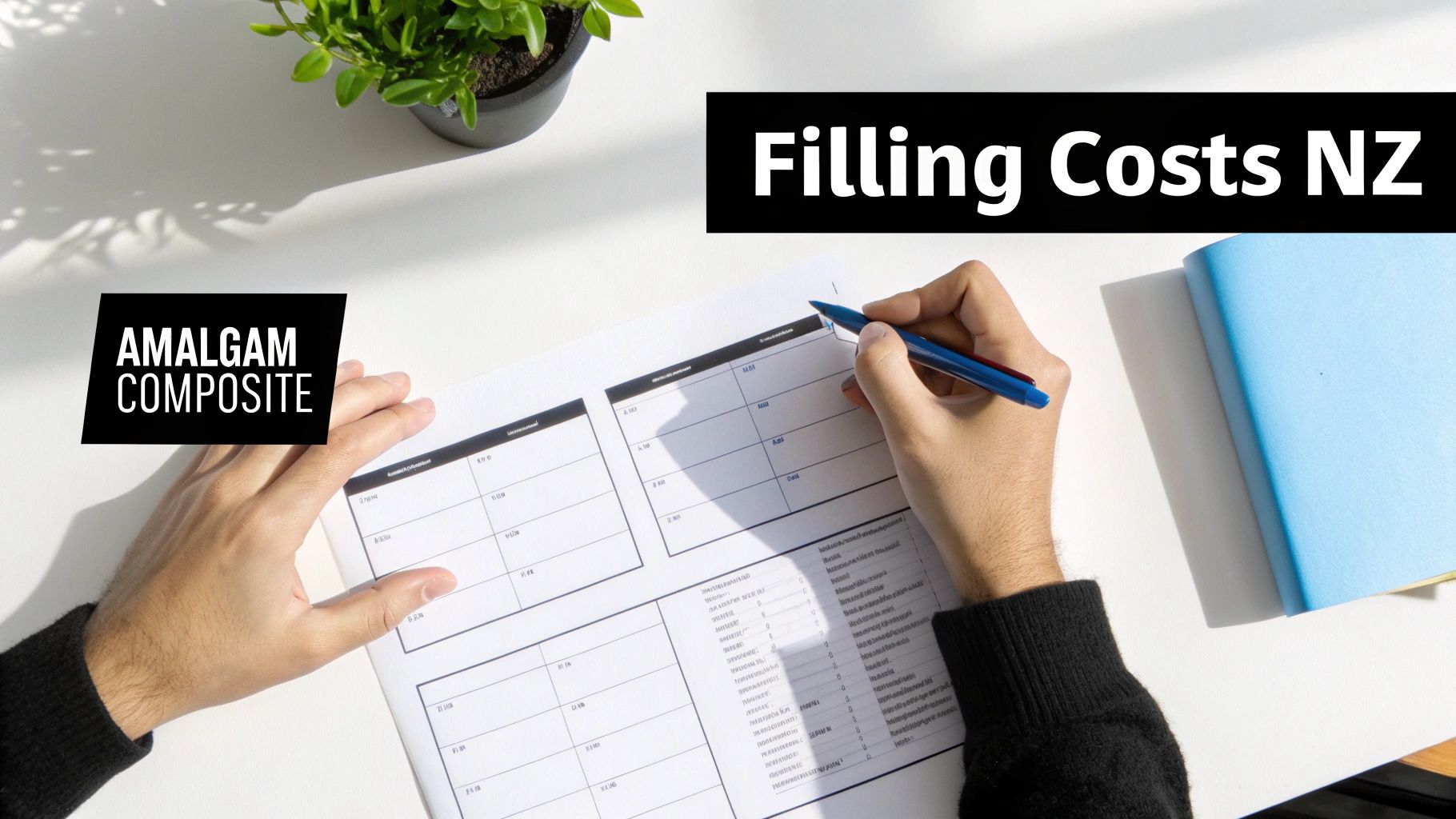
A person writing on a document about dental filling costs in NZ, showing 'Amalgam' and 'Composite' options.

It’s completely normal to feel a bit concerned about the cost of dental work. But getting a handle on the numbers is the best way to feel in control of the situation.

Think of it this way: fixing a tiny chip in your car's windscreen is always going to be cheaper than replacing the whole thing. The same logic applies to your teeth. The size of the cavity, where it is in your mouth, and how complex the repair is will all play a part in the final bill.

This guide is here to give you a realistic idea of what to expect, financially speaking. We'll break down the costs of the most common filling types so you can see how they stack up.

A Quick Look at the Numbers

So, what are we actually talking about in terms of dollars and cents?

Here’s a quick overview of what you can expect to pay for the two most common types of dental fillings here in New Zealand. These are average costs for fillings covering one or two surfaces of a tooth.

Estimated Teeth Filling Costs in NZ

Filling MaterialAppearanceAverage Cost Range (1-2 Surfaces)Best For
AmalgamSilver/metallic$201 – $323Back teeth (molars) where strength is key
Composite ResinTooth-coloured$231 – $378Front teeth or visible areas for a natural look

These figures are based on the New Zealand Dental Association's 2023 survey, and they really highlight how much the material you choose can affect the price. You can find more details about these dental cost trends from recent news reports covering the survey.

We believe in clear, upfront pricing. That’s why we offer a comprehensive $100 check-up deal, which includes your X-rays and a polish. This gives you a proper diagnosis and a firm quote before any work starts, so you can plan your budget without any nasty surprises.

When you start with a clear picture of the costs, you can make a decision about your oral health that you feel good about. Let's dig a bit deeper into the options available.

What Factors Change the Price of Your Filling?

The final figure on your dental quote isn't just a random number. A few key things come together to determine the teeth filling cost in NZ, a bit like how a car repair bill depends on more than just the new part. A small, simple filling on a tooth that’s easy to get to will always be cheaper than a large, complex job on a back molar.

Getting your head around these variables helps you understand your treatment plan. You'll see exactly what goes into the cost and why one filling might be priced differently from another, even in your own mouth.

Material Choice

One of the biggest factors in the price is the actual material we use to fill the tooth. Each option has its own pros and cons when it comes to strength, looks, and, of course, cost.

  • Amalgam (Silver): This is the most budget-friendly choice. It’s incredibly tough and long-lasting, which makes it a solid option for molars that do all the heavy lifting when you chew.
  • Composite Resin (Tooth-Coloured): A very popular option because we can match it to the shade of your natural teeth, making it practically invisible. It also bonds directly to the tooth, which often means we can preserve more of your healthy tooth structure.
  • Ceramic (Porcelain): As a premium material, ceramic fillings (or inlays/onlays) look fantastic and are highly resistant to staining. Their natural appearance is top-notch, but they do sit at a higher price point.

Size and Location of the Cavity

How big the cavity is and where it is in your mouth play a huge role. Think of it as dental real estate—some spots are just harder to work on than others.

A tiny spot of decay on a single surface of a front tooth is pretty straightforward to access and fix. Compare that to a large cavity that has spread across multiple surfaces of a back molar, and you’re suddenly looking at a job that demands more time, skill, and material from your dentist.

Those hard-to-reach molars often need more intricate work to make sure the filling is shaped perfectly and creates a tight seal, which naturally adds to the cost.

The complexity of the job is directly tied to the final bill. A deep cavity that’s getting close to the tooth's nerve needs a much more delicate and time-consuming approach than a shallow one, and the price will reflect that.

Technology and Extra Services

Modern dentistry relies on some pretty clever tech to give you the best care, and using these tools can influence the cost. For example, taking digital X-rays is crucial for accurately seeing how far decay has gone, but it does add to the overall appointment cost.

On top of that, if you're feeling a bit nervous about the procedure, you might choose to have sedation. While options like IV sedation can make the whole experience completely stress-free, they are an additional service with their own fee. These are fantastic for ensuring your comfort, but it’s something to keep in mind when budgeting for the treatment.

Amalgam vs. Composite Fillings: A Detailed Comparison

When it comes to fillings, the choice between silver and tooth-coloured materials is about more than just looks. Each option has its own set of pros and cons that can influence everything from your budget to the long-term health of your tooth.

Making a good decision means weighing up the durability, appearance, and the overall teeth filling cost in NZ for both amalgam and composite fillings. Let's dig into what really sets them apart.

The Case for Amalgam (Silver) Fillings

There's a reason amalgam fillings have been a staple in dentistry for over 150 years. Made from a durable mix of metals like silver, tin, and copper, they are incredibly tough and long-lasting.

This strength makes them a fantastic choice for your back molars, which do all the heavy lifting when you chew. They're also the more affordable option, which is a big deal for many Kiwis managing their dental budgets.

Of course, the main drawback is how they look. The noticeable silver colour doesn't blend in with your natural teeth, which can be a concern for some people when they talk or smile.

The Appeal of Composite (White) Fillings

Composite resin fillings have soared in popularity, and it's easy to see why. Their biggest advantage is aesthetics—the material can be carefully shaded to match your natural tooth colour, making the filling practically invisible.

But it's not just about looks. Composite material chemically bonds to the tooth. This means we can be more conservative and remove less of your healthy tooth structure to place the filling. That bond can even add a bit of strength back to the tooth. If you're curious about how these materials work, you can learn more on our main dental fillings page.

On the flip side, composite fillings generally cost more than their amalgam counterparts and, in some high-pressure situations on back teeth, they may not last quite as long.

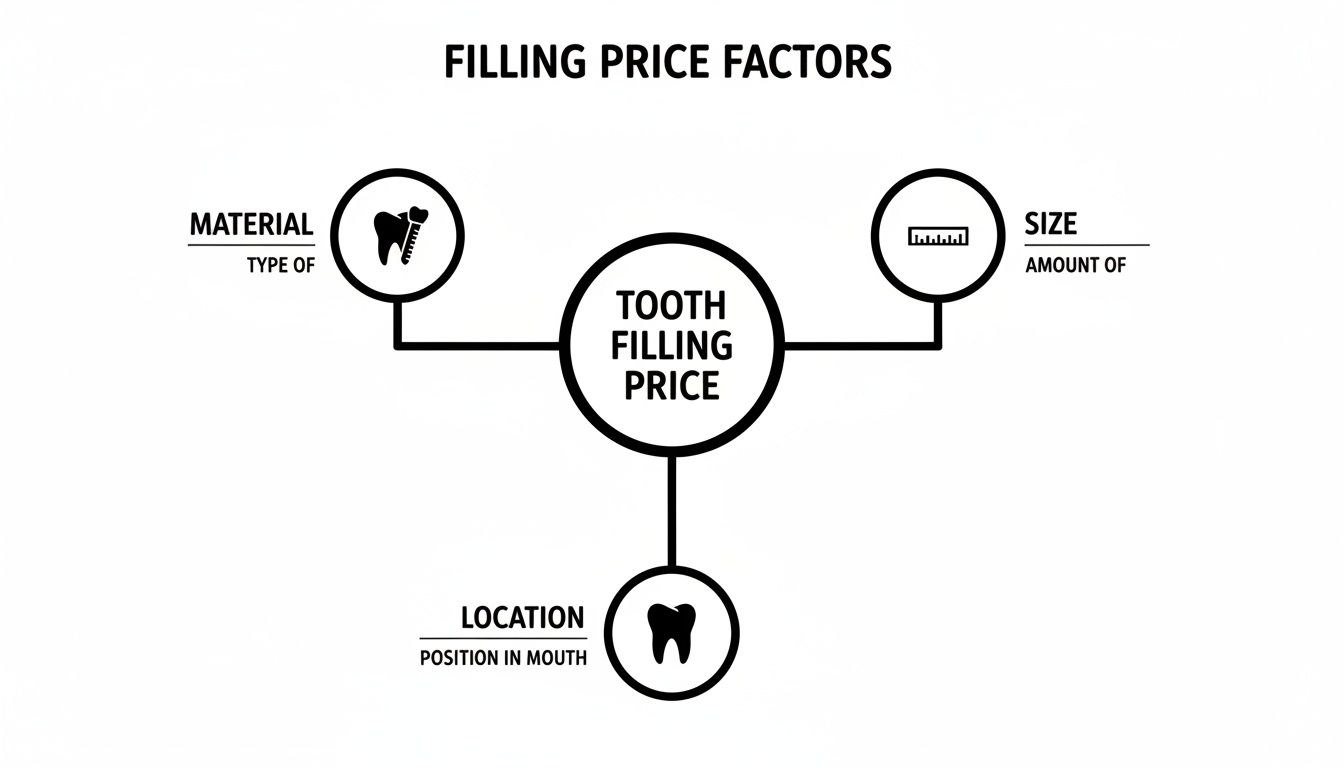
The final cost of your filling really comes down to three things: the material you choose, the size of the cavity, and which tooth needs the work.

A diagram illustrating the key factors influencing tooth filling price, including material type, size, and location.

As you can see, that initial choice between a cost-effective amalgam and a cosmetic composite is one of the biggest factors influencing the final bill.

Comparing Amalgam (Silver) and Composite (White) Fillings

To make it easier, here’s a straightforward comparison breaking down the key differences between the two most common types of fillings.

FeatureAmalgam (Silver) FillingComposite (White) Filling
AppearanceNoticeable metallic silver colour.Natural, tooth-coloured and custom-matched.
DurabilityExtremely strong and long-lasting (10-15 years).Good durability, but may wear faster on molars (5-10 years).
PlacementRequires more removal of healthy tooth structure.Bonds directly to the tooth, preserving more natural structure.
CostMore affordable. $201 – $323 (as of 2023).More expensive. $231 – $378 (as of 2023).
Best ForLarge fillings in back teeth (molars).Small-to-mid-sized fillings, especially visible teeth.

Ultimately, the best choice really depends on your specific situation, balancing what you can afford with the cosmetic and functional needs of the tooth.

Dental care costs in New Zealand are definitely a consideration for families, with the average appointment costing around $353. It’s important to have these conversations with your dentist.

Your dentist will always talk you through the best option for your unique situation. For a front tooth where looks matter, a composite filling is the clear winner. But for a large cavity on a back molar, a tough-as-nails amalgam might be the more practical, long-term solution.

How to Manage the Cost of Your Dental Filling

Let's be honest, figuring out how to pay for dental work can be a real worry. It’s a common concern, but the good news is that here in New Zealand, you’ve got options. You don't have to let financial stress get in the way of getting the treatment you need.

Getting your head around the different pathways, from public funding to private insurance, is the best first step. We'll walk through the main financial support systems available so you can see what you might be eligible for.

Free Dental Care for Teens

This is a big one for Kiwi families. In New Zealand, basic dental care is publicly funded for all children and adolescents right up until their 18th birthday.

That means if you've got a teenager, their regular check-ups, cleans, and any necessary fillings won't cost you a thing. All you need to do is enrol them with a dentist who participates in the scheme.

Support from Work and Income (WINZ)

For adults who are dealing with a painful dental problem and are on a low income, Work and Income (WINZ) may be able to help. You might be eligible for a grant to cover the cost of essential treatment.

This support is there for those situations where a dental issue is causing serious pain or making life difficult. To apply, you'll need a quote from your dentist, and our team is more than happy to help you sort out the required paperwork.

Financial stress should never force you to endure dental pain. WINZ grants are a crucial safety net that ensures Kiwis on low incomes can access emergency care when they need it most.

ACC for Fillings Needed After an Accident

If you've damaged a tooth in an accident – maybe from a sports injury, a fall, or any other kind of mishap – the Accident Compensation Corporation (ACC) can step in to help. ACC will contribute to the cost of your dental treatment, which includes fillings needed to repair the damage.

Getting it sorted is pretty straightforward:

  1. See Your Dentist: Come in so we can assess the injury and figure out the best way to fix it.
  2. Fill Out a Form: We’ll help you complete the ACC claim form right here at the clinic.
  3. Start Treatment: Once your claim is approved, ACC covers a portion of your treatment bill, which brings your out-of-pocket cost down.

Using Your Private Health Insurance

If you have private health insurance, there's a good chance your policy includes dental benefits that could cover part or even all of your filling costs. Just remember that the level of cover can vary hugely between different providers and plans.

It's always a smart move to check your policy details or give your insurer a quick call before your appointment. Find out about your annual limits, see if there are any specific exclusions, and check for any waiting periods. Knowing these details beforehand helps you get the most out of your benefits and avoid any nasty surprises.

For more information, feel free to explore our flexible payment options to find a solution that works for you.

Why Ignoring a Cavity Costs More in the Long Run

It's tempting to put off a dental filling. You get the quote, you look at your budget, and you think, "Maybe I can wait a little while." While that feels like a savvy short-term move, it's a gamble that rarely pays off. A cavity, unfortunately, doesn't heal itself or just stay the same size; it's an active infection that only gets worse.

Think of it like a tiny bit of rust on your car. At first, it's a small, easy-to-fix spot. But leave it to the elements, and that little spot will spread, eating away at the metal until you’re facing a major, expensive bodywork job. It's the exact same story with a cavity in your tooth.

The Escalating Cost of Delay

What begins as a minor bit of decay can quickly spiral. The bacteria burrowing into your tooth will move from the tough outer enamel into the softer layer of dentine beneath. This is the tipping point where a simple filling can morph into a much more serious, and costly, problem.

An ignored cavity will always get bigger, paving the way for more invasive procedures with much higher price tags. The initial teeth filling cost in NZ is just a fraction of what you'll be looking at once that decay reaches the delicate nerve, or pulp, inside your tooth.

Here’s how things typically go from bad to worse:

  • Stage 1: A Root Canal
    Once the decay hits the nerve, a filling is off the table. The infection needs to be cleaned out with root canal therapy, a procedure that often costs well over $1,000.

  • Stage 2: A Dental Crown
    A tooth that’s had a root canal is often quite weak and brittle. To stop it from cracking, you'll almost certainly need a dental crown placed over top, which is another big-ticket item added to your treatment bill.

  • Stage 3: Tooth Extraction and Replacement
    If things are left for too long, the tooth might become so damaged that it can't be saved at all. Extraction becomes the only option, and then you're looking at the cost of replacing it with something like a dental implant, which can run into thousands of dollars.

Early treatment isn't an expense—it's an investment. By addressing a small cavity promptly, you prevent the need for more invasive and far more expensive treatments, protecting both your oral health and your wallet.

As you can see, understanding how dental fillings can preserve your natural smile isn't just about looks; it's about being smart with your health and your money. Acting quickly is the best financial decision you can make.

What to Expect at Your Filling Appointment

Knowing what happens step-by-step can make a dental filling feel a lot less intimidating. We want you to feel prepared and comfortable from the moment you walk through our doors. That's why we offer things like convenient hours and free onsite parking here in Newtown—it’s all about making your visit as stress-free as possible.

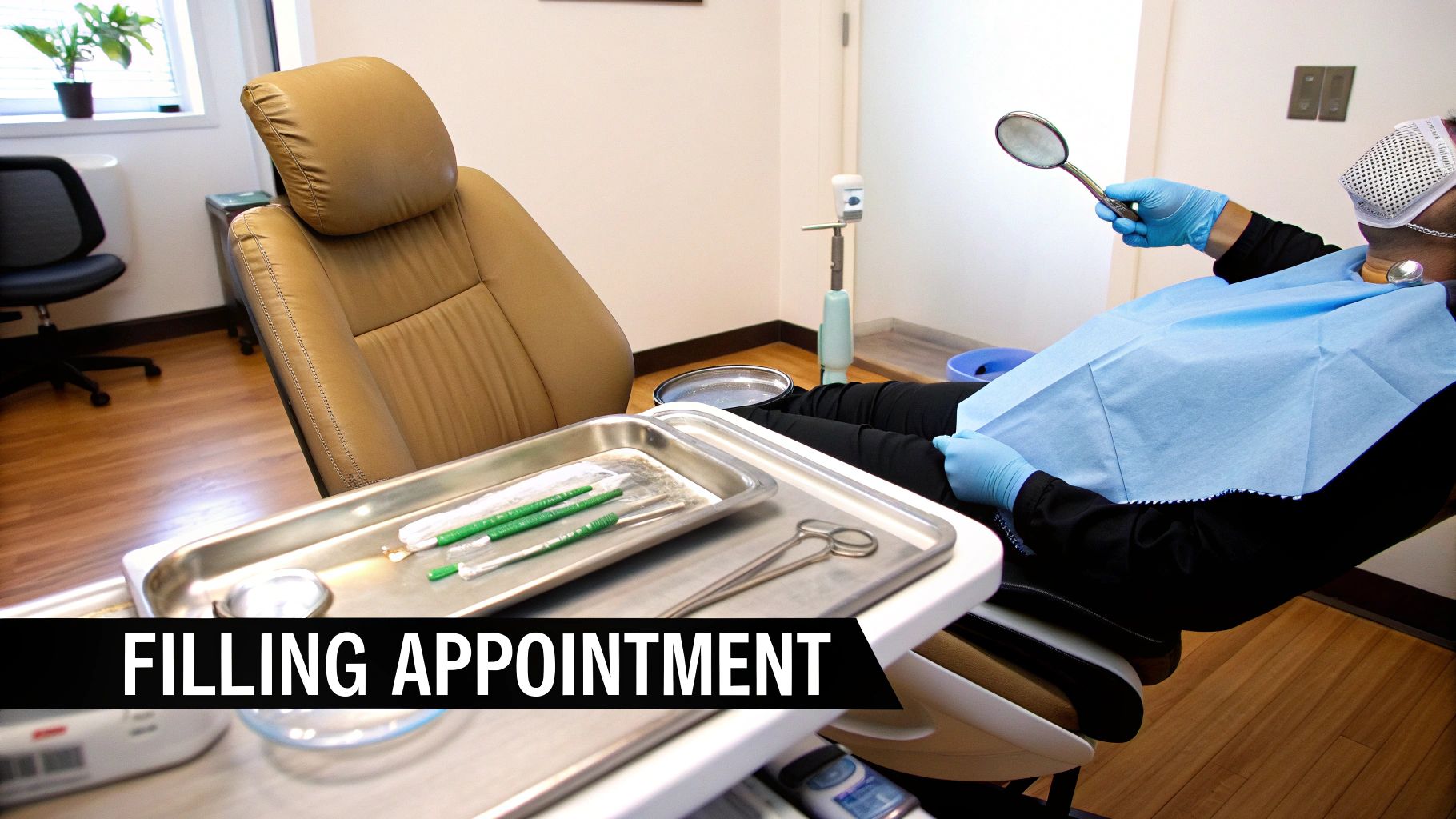
A patient in a dental chair, wearing a bib, holds a mirror during a filling appointment.

The very first thing we do is make sure you're completely comfortable. A local anaesthetic is gently applied to numb the tooth and the area around it, which means you won't feel any pain during the actual procedure. Your comfort really is our top priority.

Once you’re numb, your dentist will carefully remove the decayed part of the tooth. We then thoroughly clean and prepare the cavity, making it the perfect surface for its new, strong filling.

Placing and Finishing Your New Filling

With the prep work done, it's time to place the filling material. If you've opted for a tooth-coloured composite filling, we apply it in layers, hardening each one with a special light. Finally, we shape and polish the new filling so it blends in seamlessly with your natural tooth, and we'll check your bite to make sure everything feels just right.

This careful, step-by-step process is what quality dental care is all about. Unfortunately, nationwide workforce shortages can make it tough for people to get the care they need. It takes an average of 24 weeks to hire a dentist, which can drive up costs and create long waits. These access issues also lead to significant productivity losses for the country, which just goes to show how vital timely dental treatment is. You can learn more about these dental workforce challenges in New Zealand on consumer.org.nz.

Your well-being is at the heart of everything we do. We always take the time to explain each step, answer all your questions, and make sure you feel in control of your treatment.

Options for Anxious Patients

We get it—visiting the dentist can be a real source of anxiety for many people. It’s completely normal to feel nervous, and our team is here to help you have a positive, calm experience. For anyone feeling particularly anxious, we have options to ensure your comfort.

  • IV Sedation: If you have significant dental anxiety or are undergoing a more complex procedure, IV sedation can be a game-changer. It puts you in a state of deep relaxation, making the whole appointment feel calm and comfortable. You’ll be conscious enough to cooperate with us, but you’ll likely remember very little about the procedure afterwards.

Still Have Questions About Fillings?

It's completely normal to have a few more things on your mind, especially when it comes to the cost and what the best choice is for your own teeth. Here are some of the questions we hear most often from our patients, answered in plain English.

Does ACC Cover a Chipped Tooth Filling?

Yes, absolutely. If you need a filling because of an accident or injury, ACC can help with the cost. It's a straightforward process – you'll just need to fill out a claim form when you come in for your appointment. We handle ACC claims all the time and can walk you through it to make sure everything is sorted correctly.

Is Pulling a Tooth Cheaper Than a Filling?

This is a common question, and while pulling a tooth might look cheaper on paper at first, it's often a false economy. Leaving a gap can cause surrounding teeth to drift and shift, leading to crooked teeth and problems with your bite down the track.

Eventually, you might need to replace that missing tooth with a dental implant or a bridge, which can cost thousands. When you look at it that way, the initial teeth filling cost in NZ is a much smarter investment in your long-term health.

A filling saves your natural tooth, which is almost always the healthiest and most cost-effective long-term solution for your smile and your wallet.

How Long Do Different Fillings Last?

How long your filling lasts really comes down to the material we use and how well you look after your teeth. The traditional amalgam (silver) fillings are incredibly tough and can easily last 10-15 years, sometimes even longer.

Modern composite (white) fillings have come a long way and are also very durable, typically lasting a solid 7-10 years. Regular check-ups are key, as they allow us to keep an eye on your fillings and spot any tiny issues before they become big problems.

Can I Get a Filling on the Same Day as My Check-up?

In many cases, yes. If we spot a small, simple cavity during your routine check-up and the schedule allows, we'll often suggest taking care of it right then and there. It saves you from having to make another trip.

For more complex fillings or if you need several, we'll usually book a separate, dedicated appointment to ensure we have enough time to do a perfect job. And of course, we always have same-day emergency appointments available for more urgent situations.


Ready to take the next step towards a healthier smile? At Newtown Dental, we provide clear, upfront pricing and a full range of dental services to meet your needs. Book your appointment online or give us a call today. Visit us at https://newtowndental.co.nz.

For dental emergencies or urgent appointments please call us as we have extra spots available.