When you find out you need a filling, one of the first things you probably think about is the cost. It’s a fair question. In New Zealand, the price for a dental filling can start from around $201 for a straightforward silver (amalgam) filling and go up to $378 or more for a larger, tooth-coloured (composite) one. The final figure really comes down to the material your dentist uses and how big the cavity is.
Your Guide to Dental Filling Costs in NZ
It’s completely normal to feel a bit concerned about the cost of dental work. But getting a handle on the numbers is the best way to feel in control of the situation.
Think of it this way: fixing a tiny chip in your car's windscreen is always going to be cheaper than replacing the whole thing. The same logic applies to your teeth. The size of the cavity, where it is in your mouth, and how complex the repair is will all play a part in the final bill.
This guide is here to give you a realistic idea of what to expect, financially speaking. We'll break down the costs of the most common filling types so you can see how they stack up.
A Quick Look at the Numbers
So, what are we actually talking about in terms of dollars and cents?
Here’s a quick overview of what you can expect to pay for the two most common types of dental fillings here in New Zealand. These are average costs for fillings covering one or two surfaces of a tooth.
Estimated Teeth Filling Costs in NZ
| Filling Material | Appearance | Average Cost Range (1-2 Surfaces) | Best For |
|---|---|---|---|
| Amalgam | Silver/metallic | $201 – $323 | Back teeth (molars) where strength is key |
| Composite Resin | Tooth-coloured | $231 – $378 | Front teeth or visible areas for a natural look |
These figures are based on the New Zealand Dental Association's 2023 survey, and they really highlight how much the material you choose can affect the price. You can find more details about these dental cost trends from recent news reports covering the survey.
We believe in clear, upfront pricing. That’s why we offer a comprehensive $100 check-up deal, which includes your X-rays and a polish. This gives you a proper diagnosis and a firm quote before any work starts, so you can plan your budget without any nasty surprises.
When you start with a clear picture of the costs, you can make a decision about your oral health that you feel good about. Let's dig a bit deeper into the options available.
What Factors Change the Price of Your Filling?
The final figure on your dental quote isn't just a random number. A few key things come together to determine the teeth filling cost in NZ, a bit like how a car repair bill depends on more than just the new part. A small, simple filling on a tooth that’s easy to get to will always be cheaper than a large, complex job on a back molar.
Getting your head around these variables helps you understand your treatment plan. You'll see exactly what goes into the cost and why one filling might be priced differently from another, even in your own mouth.
Material Choice
One of the biggest factors in the price is the actual material we use to fill the tooth. Each option has its own pros and cons when it comes to strength, looks, and, of course, cost.
- Amalgam (Silver): This is the most budget-friendly choice. It’s incredibly tough and long-lasting, which makes it a solid option for molars that do all the heavy lifting when you chew.
- Composite Resin (Tooth-Coloured): A very popular option because we can match it to the shade of your natural teeth, making it practically invisible. It also bonds directly to the tooth, which often means we can preserve more of your healthy tooth structure.
- Ceramic (Porcelain): As a premium material, ceramic fillings (or inlays/onlays) look fantastic and are highly resistant to staining. Their natural appearance is top-notch, but they do sit at a higher price point.
Size and Location of the Cavity
How big the cavity is and where it is in your mouth play a huge role. Think of it as dental real estate—some spots are just harder to work on than others.
A tiny spot of decay on a single surface of a front tooth is pretty straightforward to access and fix. Compare that to a large cavity that has spread across multiple surfaces of a back molar, and you’re suddenly looking at a job that demands more time, skill, and material from your dentist.
Those hard-to-reach molars often need more intricate work to make sure the filling is shaped perfectly and creates a tight seal, which naturally adds to the cost.
The complexity of the job is directly tied to the final bill. A deep cavity that’s getting close to the tooth's nerve needs a much more delicate and time-consuming approach than a shallow one, and the price will reflect that.
Technology and Extra Services
Modern dentistry relies on some pretty clever tech to give you the best care, and using these tools can influence the cost. For example, taking digital X-rays is crucial for accurately seeing how far decay has gone, but it does add to the overall appointment cost.
On top of that, if you're feeling a bit nervous about the procedure, you might choose to have sedation. While options like IV sedation can make the whole experience completely stress-free, they are an additional service with their own fee. These are fantastic for ensuring your comfort, but it’s something to keep in mind when budgeting for the treatment.
Amalgam vs. Composite Fillings: A Detailed Comparison
When it comes to fillings, the choice between silver and tooth-coloured materials is about more than just looks. Each option has its own set of pros and cons that can influence everything from your budget to the long-term health of your tooth.
Making a good decision means weighing up the durability, appearance, and the overall teeth filling cost in NZ for both amalgam and composite fillings. Let's dig into what really sets them apart.
The Case for Amalgam (Silver) Fillings
There's a reason amalgam fillings have been a staple in dentistry for over 150 years. Made from a durable mix of metals like silver, tin, and copper, they are incredibly tough and long-lasting.
This strength makes them a fantastic choice for your back molars, which do all the heavy lifting when you chew. They're also the more affordable option, which is a big deal for many Kiwis managing their dental budgets.
Of course, the main drawback is how they look. The noticeable silver colour doesn't blend in with your natural teeth, which can be a concern for some people when they talk or smile.
The Appeal of Composite (White) Fillings
Composite resin fillings have soared in popularity, and it's easy to see why. Their biggest advantage is aesthetics—the material can be carefully shaded to match your natural tooth colour, making the filling practically invisible.
But it's not just about looks. Composite material chemically bonds to the tooth. This means we can be more conservative and remove less of your healthy tooth structure to place the filling. That bond can even add a bit of strength back to the tooth. If you're curious about how these materials work, you can learn more on our main dental fillings page.
On the flip side, composite fillings generally cost more than their amalgam counterparts and, in some high-pressure situations on back teeth, they may not last quite as long.
The final cost of your filling really comes down to three things: the material you choose, the size of the cavity, and which tooth needs the work.
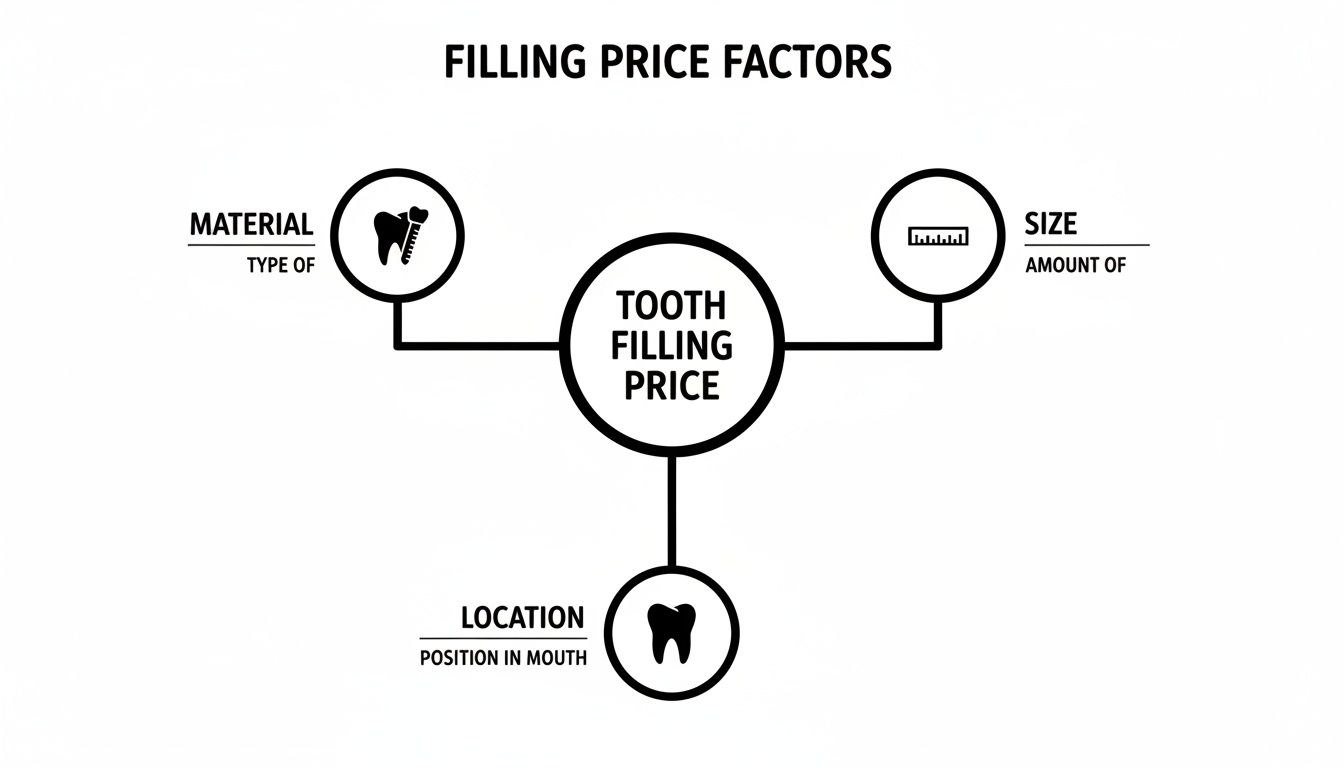
As you can see, that initial choice between a cost-effective amalgam and a cosmetic composite is one of the biggest factors influencing the final bill.
Comparing Amalgam (Silver) and Composite (White) Fillings
To make it easier, here’s a straightforward comparison breaking down the key differences between the two most common types of fillings.
| Feature | Amalgam (Silver) Filling | Composite (White) Filling |
|---|---|---|
| Appearance | Noticeable metallic silver colour. | Natural, tooth-coloured and custom-matched. |
| Durability | Extremely strong and long-lasting (10-15 years). | Good durability, but may wear faster on molars (5-10 years). |
| Placement | Requires more removal of healthy tooth structure. | Bonds directly to the tooth, preserving more natural structure. |
| Cost | More affordable. $201 – $323 (as of 2023). | More expensive. $231 – $378 (as of 2023). |
| Best For | Large fillings in back teeth (molars). | Small-to-mid-sized fillings, especially visible teeth. |
Ultimately, the best choice really depends on your specific situation, balancing what you can afford with the cosmetic and functional needs of the tooth.
Dental care costs in New Zealand are definitely a consideration for families, with the average appointment costing around $353. It’s important to have these conversations with your dentist.
Your dentist will always talk you through the best option for your unique situation. For a front tooth where looks matter, a composite filling is the clear winner. But for a large cavity on a back molar, a tough-as-nails amalgam might be the more practical, long-term solution.
How to Manage the Cost of Your Dental Filling
Let's be honest, figuring out how to pay for dental work can be a real worry. It’s a common concern, but the good news is that here in New Zealand, you’ve got options. You don't have to let financial stress get in the way of getting the treatment you need.
Getting your head around the different pathways, from public funding to private insurance, is the best first step. We'll walk through the main financial support systems available so you can see what you might be eligible for.
Free Dental Care for Teens
This is a big one for Kiwi families. In New Zealand, basic dental care is publicly funded for all children and adolescents right up until their 18th birthday.
That means if you've got a teenager, their regular check-ups, cleans, and any necessary fillings won't cost you a thing. All you need to do is enrol them with a dentist who participates in the scheme.
Support from Work and Income (WINZ)
For adults who are dealing with a painful dental problem and are on a low income, Work and Income (WINZ) may be able to help. You might be eligible for a grant to cover the cost of essential treatment.
This support is there for those situations where a dental issue is causing serious pain or making life difficult. To apply, you'll need a quote from your dentist, and our team is more than happy to help you sort out the required paperwork.
Financial stress should never force you to endure dental pain. WINZ grants are a crucial safety net that ensures Kiwis on low incomes can access emergency care when they need it most.
ACC for Fillings Needed After an Accident
If you've damaged a tooth in an accident – maybe from a sports injury, a fall, or any other kind of mishap – the Accident Compensation Corporation (ACC) can step in to help. ACC will contribute to the cost of your dental treatment, which includes fillings needed to repair the damage.
Getting it sorted is pretty straightforward:
- See Your Dentist: Come in so we can assess the injury and figure out the best way to fix it.
- Fill Out a Form: We’ll help you complete the ACC claim form right here at the clinic.
- Start Treatment: Once your claim is approved, ACC covers a portion of your treatment bill, which brings your out-of-pocket cost down.
Using Your Private Health Insurance
If you have private health insurance, there's a good chance your policy includes dental benefits that could cover part or even all of your filling costs. Just remember that the level of cover can vary hugely between different providers and plans.
It's always a smart move to check your policy details or give your insurer a quick call before your appointment. Find out about your annual limits, see if there are any specific exclusions, and check for any waiting periods. Knowing these details beforehand helps you get the most out of your benefits and avoid any nasty surprises.
For more information, feel free to explore our flexible payment options to find a solution that works for you.
Why Ignoring a Cavity Costs More in the Long Run
It's tempting to put off a dental filling. You get the quote, you look at your budget, and you think, "Maybe I can wait a little while." While that feels like a savvy short-term move, it's a gamble that rarely pays off. A cavity, unfortunately, doesn't heal itself or just stay the same size; it's an active infection that only gets worse.
Think of it like a tiny bit of rust on your car. At first, it's a small, easy-to-fix spot. But leave it to the elements, and that little spot will spread, eating away at the metal until you’re facing a major, expensive bodywork job. It's the exact same story with a cavity in your tooth.
The Escalating Cost of Delay
What begins as a minor bit of decay can quickly spiral. The bacteria burrowing into your tooth will move from the tough outer enamel into the softer layer of dentine beneath. This is the tipping point where a simple filling can morph into a much more serious, and costly, problem.
An ignored cavity will always get bigger, paving the way for more invasive procedures with much higher price tags. The initial teeth filling cost in NZ is just a fraction of what you'll be looking at once that decay reaches the delicate nerve, or pulp, inside your tooth.
Here’s how things typically go from bad to worse:
Stage 1: A Root Canal
Once the decay hits the nerve, a filling is off the table. The infection needs to be cleaned out with root canal therapy, a procedure that often costs well over $1,000.Stage 2: A Dental Crown
A tooth that’s had a root canal is often quite weak and brittle. To stop it from cracking, you'll almost certainly need a dental crown placed over top, which is another big-ticket item added to your treatment bill.Stage 3: Tooth Extraction and Replacement
If things are left for too long, the tooth might become so damaged that it can't be saved at all. Extraction becomes the only option, and then you're looking at the cost of replacing it with something like a dental implant, which can run into thousands of dollars.
Early treatment isn't an expense—it's an investment. By addressing a small cavity promptly, you prevent the need for more invasive and far more expensive treatments, protecting both your oral health and your wallet.
As you can see, understanding how dental fillings can preserve your natural smile isn't just about looks; it's about being smart with your health and your money. Acting quickly is the best financial decision you can make.
What to Expect at Your Filling Appointment
Knowing what happens step-by-step can make a dental filling feel a lot less intimidating. We want you to feel prepared and comfortable from the moment you walk through our doors. That's why we offer things like convenient hours and free onsite parking here in Newtown—it’s all about making your visit as stress-free as possible.
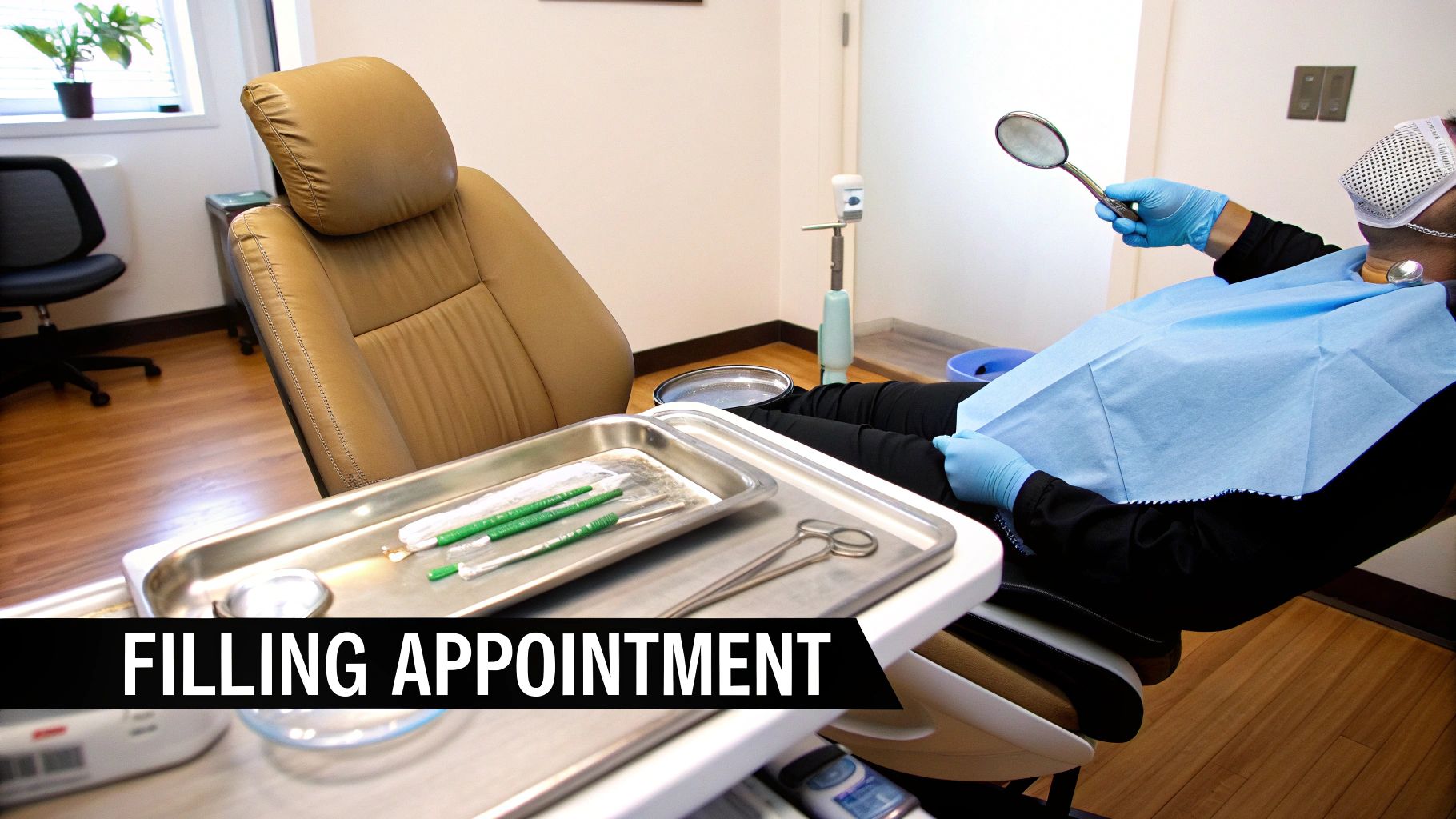
The very first thing we do is make sure you're completely comfortable. A local anaesthetic is gently applied to numb the tooth and the area around it, which means you won't feel any pain during the actual procedure. Your comfort really is our top priority.
Once you’re numb, your dentist will carefully remove the decayed part of the tooth. We then thoroughly clean and prepare the cavity, making it the perfect surface for its new, strong filling.
Placing and Finishing Your New Filling
With the prep work done, it's time to place the filling material. If you've opted for a tooth-coloured composite filling, we apply it in layers, hardening each one with a special light. Finally, we shape and polish the new filling so it blends in seamlessly with your natural tooth, and we'll check your bite to make sure everything feels just right.
This careful, step-by-step process is what quality dental care is all about. Unfortunately, nationwide workforce shortages can make it tough for people to get the care they need. It takes an average of 24 weeks to hire a dentist, which can drive up costs and create long waits. These access issues also lead to significant productivity losses for the country, which just goes to show how vital timely dental treatment is. You can learn more about these dental workforce challenges in New Zealand on consumer.org.nz.
Your well-being is at the heart of everything we do. We always take the time to explain each step, answer all your questions, and make sure you feel in control of your treatment.
Options for Anxious Patients
We get it—visiting the dentist can be a real source of anxiety for many people. It’s completely normal to feel nervous, and our team is here to help you have a positive, calm experience. For anyone feeling particularly anxious, we have options to ensure your comfort.
- IV Sedation: If you have significant dental anxiety or are undergoing a more complex procedure, IV sedation can be a game-changer. It puts you in a state of deep relaxation, making the whole appointment feel calm and comfortable. You’ll be conscious enough to cooperate with us, but you’ll likely remember very little about the procedure afterwards.
Still Have Questions About Fillings?
It's completely normal to have a few more things on your mind, especially when it comes to the cost and what the best choice is for your own teeth. Here are some of the questions we hear most often from our patients, answered in plain English.
Does ACC Cover a Chipped Tooth Filling?
Yes, absolutely. If you need a filling because of an accident or injury, ACC can help with the cost. It's a straightforward process – you'll just need to fill out a claim form when you come in for your appointment. We handle ACC claims all the time and can walk you through it to make sure everything is sorted correctly.
Is Pulling a Tooth Cheaper Than a Filling?
This is a common question, and while pulling a tooth might look cheaper on paper at first, it's often a false economy. Leaving a gap can cause surrounding teeth to drift and shift, leading to crooked teeth and problems with your bite down the track.
Eventually, you might need to replace that missing tooth with a dental implant or a bridge, which can cost thousands. When you look at it that way, the initial teeth filling cost in NZ is a much smarter investment in your long-term health.
A filling saves your natural tooth, which is almost always the healthiest and most cost-effective long-term solution for your smile and your wallet.
How Long Do Different Fillings Last?
How long your filling lasts really comes down to the material we use and how well you look after your teeth. The traditional amalgam (silver) fillings are incredibly tough and can easily last 10-15 years, sometimes even longer.
Modern composite (white) fillings have come a long way and are also very durable, typically lasting a solid 7-10 years. Regular check-ups are key, as they allow us to keep an eye on your fillings and spot any tiny issues before they become big problems.
Can I Get a Filling on the Same Day as My Check-up?
In many cases, yes. If we spot a small, simple cavity during your routine check-up and the schedule allows, we'll often suggest taking care of it right then and there. It saves you from having to make another trip.
For more complex fillings or if you need several, we'll usually book a separate, dedicated appointment to ensure we have enough time to do a perfect job. And of course, we always have same-day emergency appointments available for more urgent situations.
Ready to take the next step towards a healthier smile? At Newtown Dental, we provide clear, upfront pricing and a full range of dental services to meet your needs. Book your appointment online or give us a call today. Visit us at https://newtowndental.co.nz.